From Martha Washington to Michelle Obama and Jill Biden: America’s First Ladies—From Life Experience to White House Constraints
Ahwal Al-Ma'rifa – Special Report
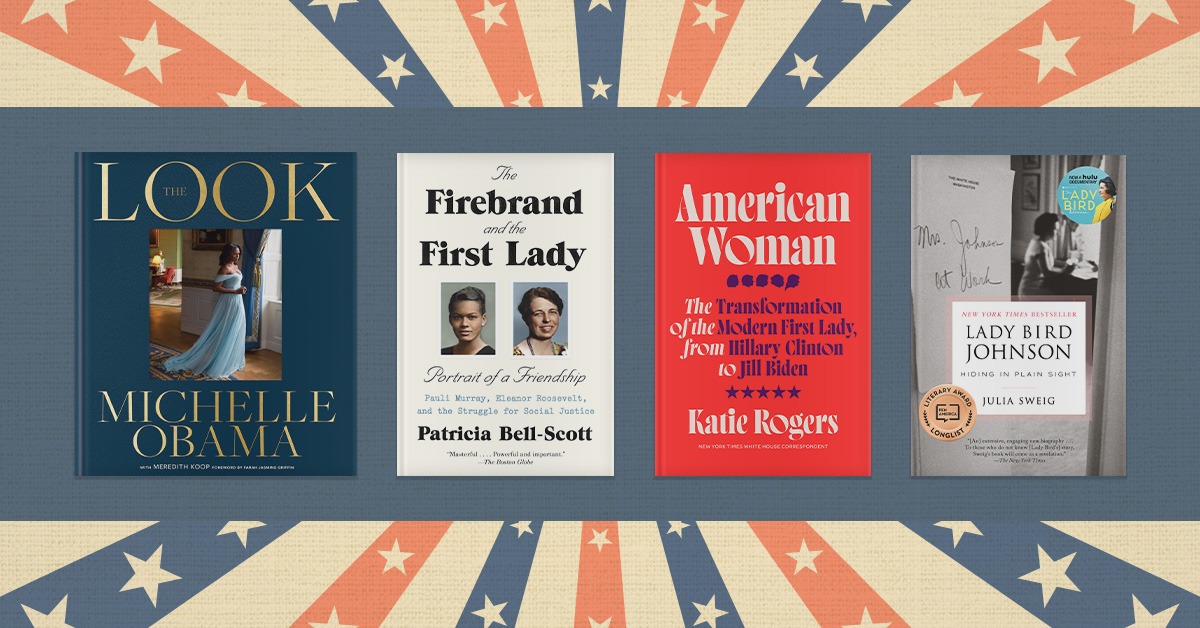
In 1938, 28-year-old Pauli Murray wrote a letter to President Franklin D. Roosevelt and First Lady Eleanor Roosevelt, protesting racial segregation in the American South. Eleanor Roosevelt responded. Thus began a friendship that lasted a quarter of a century. Murray went on to become a lawyer, a leading strategist in the struggle to protect Title VII of the Civil Rights Act of 1964, and a co-founder of the National Organization for Women. Eleanor Roosevelt, meanwhile, became a diplomat and the first chair of the United Nations Commission on Human Rights.
In her book First Lady, historian Amy S. Greenberg sheds light on the life of Sarah Childress Polk. While the 1848 Women’s Rights Convention was being held in Seneca Falls, Sarah Polk was exercising considerable influence in Washington, quietly shaping foreign policy, influencing elected officials, and advocating America’s expansionist war against Mexico. She grew up under the influence of her father, a frontier pioneer who encouraged her to engage with men in politics and business. She used her intelligence and charm to help propel her distinguished husband, James K. Polk, toward the presidency.
A Retrospective Phenomenon:
A number of recently published books in the United States tell the stories of America’s First Ladies, women who lived diverse lives and experienced very different circumstances before entering the White House alongside their presidential husbands—and after leaving it.
Together, these books represent a retrospective examination of a chapter in women’s history that has often overlooked what First Ladies actually did and the influence they exercised. The following is a concise look at some of the most notable recent biographies and memoirs revisiting their lives.
In Lady Bird Johnson: Hiding in Plain Sight, writer and researcher Julia Sweig reveals the importance of the First Lady to Lyndon B. Johnson’s administration. Lady Bird herself referred to it as “our presidency.” In addition to advising her husband at crucial moments, she pursued political initiatives of her own, including the largest national environmental effort since the presidency of Theodore Roosevelt, as well as a little-known initiative to end racial segregation in access to public recreational facilities and national parks in Washington, D.C.
Writer Louisa Thomas tells the story of Louisa Catherine Johnson, who was born in London to an American father and a British mother on the eve of the American Revolutionary War. She grew up in circumstances vastly different from those of John Quincy Adams, who was raised in New England. Nevertheless, John Quincy fell in love with her, almost against his will. Their marriage, marked by both turbulence and deep attachment, lasted half a century. They lived in Prussia, Massachusetts, Washington, Russia, and England—in royal courts, on farms, in cities, and in the White House. As the country led by her husband moved toward a more global role, she found her own voice.
In Daniel Sánchez Torres’s book, published on June 16, 2026, and titled Biographies and Memoirs of Famous First Ladies, the author writes that from Martha Washington to Michelle Obama, women who occupied positions of power in America helped shape history in ways whose significance is still becoming clear. These books bring their personalities back into focus in all their complexity: strategic, perceptive, and frequently overlooked. Whether through shaping policy behind the scenes, carefully choosing their clothing, or simply refusing to conform to expectations, First Ladies have always held views and exercised influence that extended beyond the formal limits of their position.
A Fashion Perspective:
In her book The American Woman, Katie Rogers, a correspondent for The New York Times, traces how the role of the First Lady evolved from a ceremonial symbol into an influential political figure. Drawing on interviews with people from the circles of Biden, Obama, Trump, Bush, and Clinton—including Jill Biden and Hillary Clinton—Rogers examines how changes in the media, politics, and popular culture have reshaped the position, even as its constraints have remained. Through in-depth reporting and newly revealed correspondence, Rogers presents a comprehensive portrait of Jill Biden, exploring what her story reveals about changing expectations—and enduring limitations—placed on America’s First Ladies.
In her book The Look, Michelle Obama explores how fashion served as a means of expressing meaning and conveying messages throughout her public life, beginning with her husband’s campaign for the U.S. Senate, continuing through her historic tenure as the first Black First Lady, and extending into the years that followed. Through candid personal reflections and behind-the-scenes accounts from her stylist Meredith Koop, makeup artist Carl Ray, hairstylists, and the designers behind some of her most iconic looks, Obama reveals how her most distinctive styles came together and what they were intended to communicate.