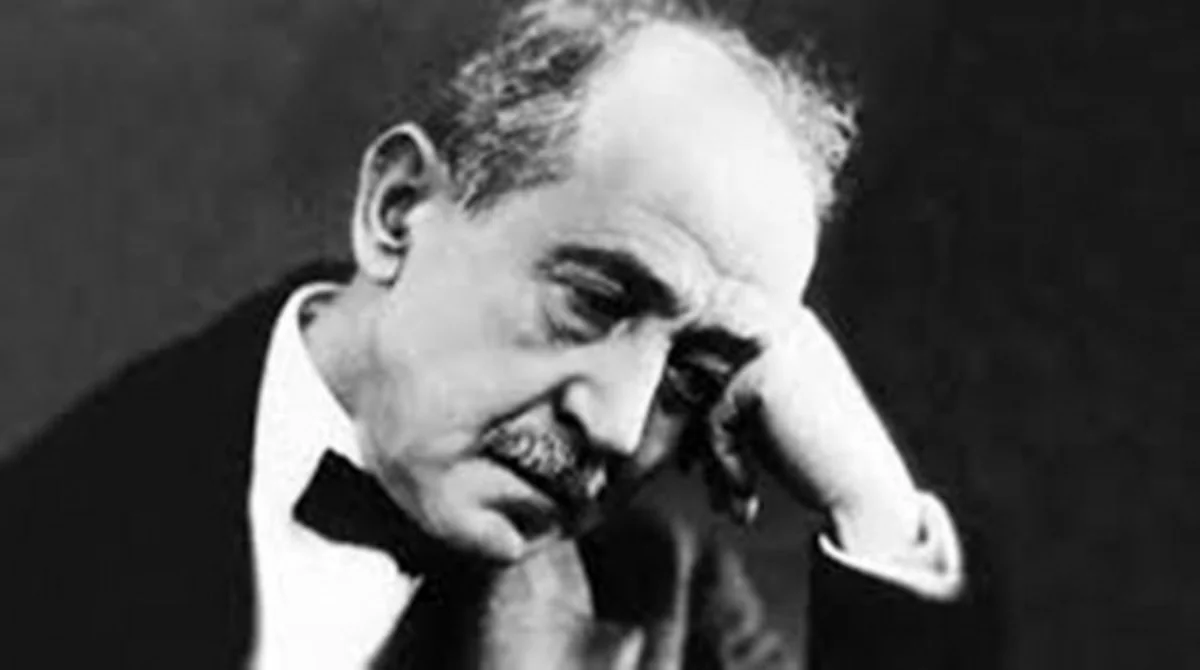
Founded by Ahmed Shawqi and mastered by Abaza, Abdel-Sabour, and Al-Maghout... Has Arabic poetic theater come to an end forever?
Has Arabic Poetic Theatre Come to an End?
Perhaps this question sheds light on a creative phenomenon of considerable importance that occupied a significant place throughout the twentieth century, both in theatrical performances and in literary and critical studies. Yet it has disappeared from the contemporary Arab theatre, which has shifted toward plays written in colloquial dialects and, at times, toward improvisational theatre.
A Poetic Foundation
The snake that bit Cleopatra in Ahmed Shawqi’s (1868–1932) play The Death of Cleopatra was nothing less than a creative bite that inspired the Prince of Poets to establish Arabic poetic theatre through a number of pioneering poetic plays, including The Madman of Layla, Ali Bey the Great, Cambyses, The Myrtle Leaf, Antarah, and Lady Huda.
Although most of these plays, as critical sources generally agree, lacked an effective dramatic dimension because Shawqi focused heavily on lyricism and poetic recitation at the expense of other theatrical elements, this pioneering beginning paved the way for those who came after him.
Aziz Abaza (1898–1973) subsequently produced several plays, including Qays and Lubna, Al-Abbasa and Al-Nasir, The Sunset of Andalusia, and The Caravan of Light.
Poetic theatre then entered a new phase with the emergence of free verse, which expanded the dramatic possibilities available to poets. Abd al-Rahman al-Sharqawi (1920–1987) wrote The Young Man Mihran, Hussein: Rebel and Martyr, Jamila, and Ahmed Urabi. Salah Abd al-Sabur (1931–1981) wrote A Night Traveler, The Princess Is Waiting, The Tragedy of al-Hallaj, and Layla and the Madman.
Muhammad al-Maghut (1934–2006) wrote the plays The Clown, The Hunchbacked Bird, and Your Cup, O Homeland. Farouk Juwaydeh (born 1945) wrote The Minister in Love, Blood on the Curtains of the Kaaba, and The Khedive.
Most of these plays had opportunities to be performed on stage, while many others were left by their authors between the covers of books.
Dramatic Transformations
Sources tell us that a considerable number of poets practiced writing poetic theatre across the generations of the twentieth century after Shawqi. In addition to the aforementioned names, there were Omar Abu Risha, Said Akl, who wrote The Daughter of Jephthah; Estefan Farhat, who wrote Dido; Muhammad Hassan Alaa al-Din, who wrote Imru’ al-Qays; Muin Bseiso, who wrote The Zanj Revolution and Samson and Delilah; Samih al-Qasim, who wrote Qarqash; Harun Hashim Rashid, who wrote The Question; and Walid Munir, who wrote The House of Stars.
Poetic theatre once possessed a special brilliance, and the performance of poetic plays was a familiar phenomenon that attracted a broad popular response. During the 1960s, for example, Salah Abd al-Sabur’s plays received considerable attention within Egypt’s cultural scene, and poetic theatre reached an artistic peak during that period.
Perhaps the last poetic play to be staged in Cairo and achieve widespread popularity was The Khedive by the poet Farouk Juwaydeh in 1994. It was performed at the National Theatre. Two of Juwaydeh’s earlier plays, The Minister in Love and Blood on the Curtains of the Kaaba, had also been staged. Despite their relatively weak artistic level, their production by the state theatre gave them considerable visibility.
The disappearance of poetic theatre from the Arab artistic scene has caused this scene to embrace commercially oriented, consumptive productions. Theatre has shifted from being a cultural institution with its own values into something resembling nightclubs that offer entertainment and spectacle, or what was referred to in the early twentieth century as al-masakhara, a form of theatrical farce and amusement.
This absence has also affected the audience’s artistic taste, as well as poets’ aspirations to employ theatrical techniques to communicate the dramatic dimensions of contemporary poetry.
The Missing Return
Who bears responsibility for the disappearance of poetic theatre from the Arab artistic scene?
Certainly, the responsibility does not rest with poets or actors alone. The question of poetic theatre is an important one for restoring beauty and grandeur to the stage, which has a direct influence on audiences. It is ultimately a question of taste, pleasure, and art, all of which elevate the value of the text and, consequently, the value of theatrical creativity as a whole.
Today, there are a large number of written plays, yet there is no living and effective poetic theatre.
Will Arabic, the first art of the Arab tradition, remain confined to its individual lyrical experience alone? When will poetry achieve its full splendor by incorporating other elements of theatrical performance, including music, dance, song, and acting?
When will poetry speak to and engage with its society and its human dimensions?
Has poetic theatre disappeared? Is the problem rooted in the creative artist, or in the demands of the theatrical market? And what does this absence signify