Saba Najd: The most famous wind in the Arabian Peninsula and the muse of early poets.
Knowledge Affairs – Special
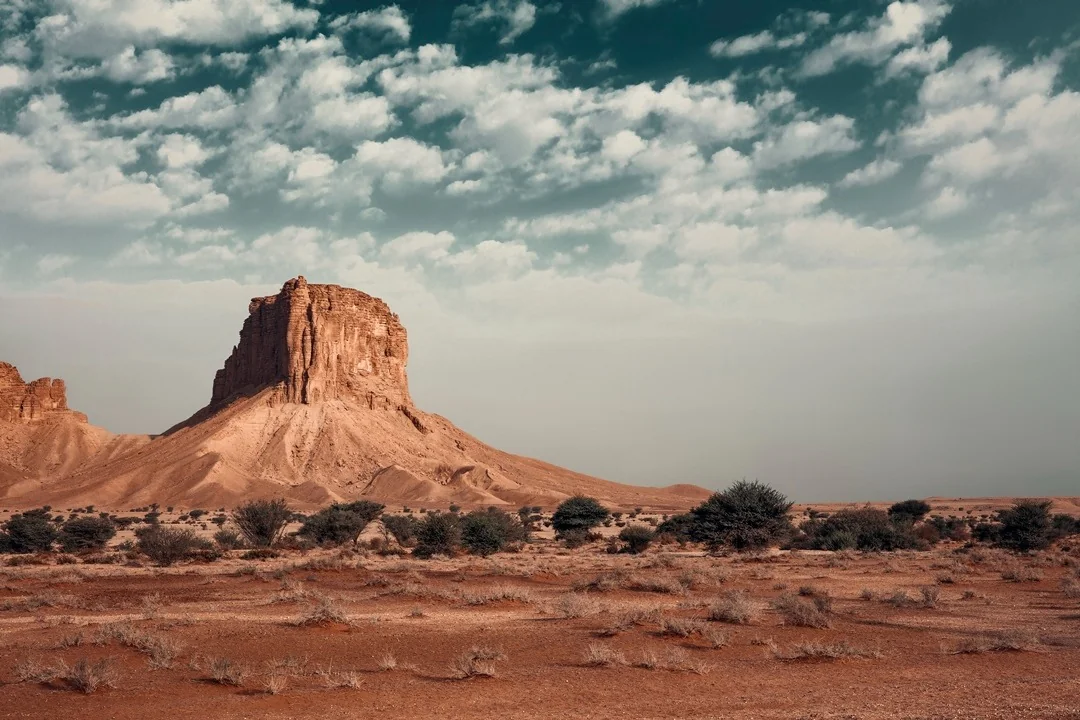
Perhaps it is one of the most famous winds to have captivated poets, who recorded its breezes in their poetry and, consequently, documented its climatic directions and the place where it blows. That place is one of the oldest and most beautiful regions of the Arabian Peninsula, as described by poets and writers: Najd, which embraces the ancient settlement of Al-Yamamah and extends across a vast geographical area of the Kingdom of Saudi Arabia, with the capital, Riyadh, located within it.
Poets have offered numerous visions inspired by the breeze of Najd, which became an oasis of comfort and a realm for poetic imagination. They wrote numerous poems about it, preserved in the diwans of poets throughout history.
Among the most famous poems written about it is the poem that begins:
O breeze of Najd, when did you stir from Najd?
Your journey has added longing upon longing to me.
The poem is attributed to the poet Yazid ibn al-Tathriyyah, and is sometimes attributed to the poet Abdullah ibn al-Dumaynah al-Khath‘ami. In any case, it was born in the heart of the Arabian Peninsula, in Najd, describing its breezes in poetry that documented this wind, which became a gentle breeze enjoyed by all, and later transformed into both a lover and a beloved.
Among the verses of the poem:
When a dove called out in the splendor of dawn
upon a tender branch of the arak tree,I wept as the lovesick weeps in longing,
and melted from agonizing grief and suffering.They claimed that when the beloved draws near,
the lover grows weary, and that distance cures longing.We tried both remedies, yet neither healed what ailed us;
still, closeness of home is better than distance.My love lies in this lowland, the lowland of Tihamah,
not in these highlands, in a place like Najd.By God, Lord of the House, you will never find me
deliberately seeking to sever the bond between us.
Abdullah ibn al-Dumaynah
Abdullah ibn Ubaydullah ibn al-Dumaynah al-Aklabi was Abdullah ibn Ubaydullah, one of the Banu Amir ibn Taym Allah ibn Mubashshir ibn Aklab. He was a Bedouin poet from the Aklab tribe of the Umayyad period. He may also be referred to as al-Khath‘ami on the basis of a tribal alliance. He was known by the epithet derived from his mother, al-Dumaynah bint Hudhayfah of Banu Sulul, and his kunyah was Abu al-Sari.
A poet and horseman, he joined the army. He is said to have been handsome, eloquent, and intensely jealous. He was among the poets of chaste, ‘Udhri love poetry, and all his poetry sings of Najd, its breeze, and its gentle winds. His poetry reveals his eloquence and his innate chaste sensibility. He was killed treacherously south of Makkah in 130 AH.
Poets Between Najd and the Breeze of Najd:
These wonderful winds that appear in Najd inspired poets, who expressed them extensively in their poems. Najd has a continental climate characterized by heat in summer and weather tending toward cold for three or four months in winter. Hail or snow may fall in the northern half of the plateau during winter. Nevertheless, its breezes create the most beautiful desert weather, as demonstrated by the poetic praise devoted to them:
The poet Al-Simmah al-Qushayri says:
I say to my companion as the camels hasten
with us between Al-Munifah and Al-Dhimar:Enjoy the scent of the ‘arar of Najd,
for after this evening there will be no more ‘arar.How delightful are the breezes of Najd,
and the fragrance of its gardens after the rain.
The poet Ibn al-Khayyat says:
Take from the breeze of Najd a message of reassurance for his heart,
for its fragrance has almost carried away his very soul.And beware of that breeze, for when it blows,
longing becomes the least of its troubles.
Breeze of Najd
Najd has always remained attached to the hearts of poets, as though there were no escape from its details whenever one passes through it. How greatly the heart longs for the fragrance of the breeze of Najd! Poets made us love it so deeply that even Najd (Sardur) regarded passing through Najd as one of the snares of love, saying:
Escape, escape from the land of Najd
before the heart becomes ensnared by longing.
Al-Tughrai says:
How beautiful is Najd, and how gentle its soil,
its breezes delicate and its breaths soft.Its air is refreshing, its earth beautifully colored,
and its water clear and flowing.And by its inhabitants, if distance draws near,
souls find healing and eyelids are held awake.
Ibn al-Ta‘awidhi said:
My two companions, is there any hope for bygone days
to return, after they passed so beautifully?Take me back to a halt among the dwellings of the people,
if you pass by the landmarks of Najd.
Perhaps the most famous verse that also mentions Najd is that of Sa‘id ibn Humayd al-Manbiji, famously known as “Al-Dawqalah,” addressing his beloved:
If you turn toward Tihamah, then Tihamah is my homeland;
and if you turn toward Najd, then love itself is Najd.
That is, I love the places wherever you may be. The poet chose Najd and Tihamah because, in the collective Arab imagination, they were associated with love and passion, much as the names Layla and Su‘ad were traditionally associated with the beloved.
Regions of Najd:
The western and northern parts of Najd are characterized by their extensive regions suitable for grazing. Among the most important pastures in Najd is High Najd, located between the Hijaz and Jabal Tuwayq, as well as the regions of Al-Summān and Al-Dabdabah, bordering Iraq and crossed by Wadi Al-Batin, one of the longest valleys of the Arabian Peninsula.
In later centuries, the people of Najd became accustomed to dividing its settlements into several regions, the most important of which include: Sudair, Al-Jabalayn, Al-Washm, Al-Sirr, Al-Zulfi, Al-Qassim, High Najd, Low Najd, Al-Mahmal, Al-Shu‘ayb, Al-Aridh, Al-‘Ard, Al-Kharj, Al-Far‘, Al-Aflaj, and Tathlith.
Most of these places appeared in Arabic poetry, portraying for us the beauty of desert landscapes and the aesthetics of movement and travel that prevailed in earlier eras. In Najd, Abdullah ibn Ajlan al-Nahdi, a Hijazi poet whose heart became attached to Najd because his beloved was from Najd, recited:
He wept, and the mountains of Subh echoed for him,
while the mountains of Marwat answered his grief.A Hijazi in love, attached to Najd,
consumed by longing, neither living nor dying.As though his heart were the hands of a drowning man,
contested by a fish upon the seashore.
The poet Marwan al-Asghar ibn Abi al-Janub repeats the word “Najd” six times in only two verses, as though he revels in uttering the name and takes pleasure in hearing the word “Najd.” He says:
May God water Najd, and peace be upon Najd,
how beautiful is Najd despite distance and separation.I looked toward Najd, with Baghdad beyond it,
perhaps I might see Najd—yet far, far is Najd.In Najd are people whose love is to have me visit them,
and nothing is sweeter to me than visiting them.
The poem “O Breeze of Najd” remains one of the most prominent poems to have embraced the breezes of Najd in its words, transforming its winds into the most famous fragrant breeze associated with the geography of the place in Arabic poetry.