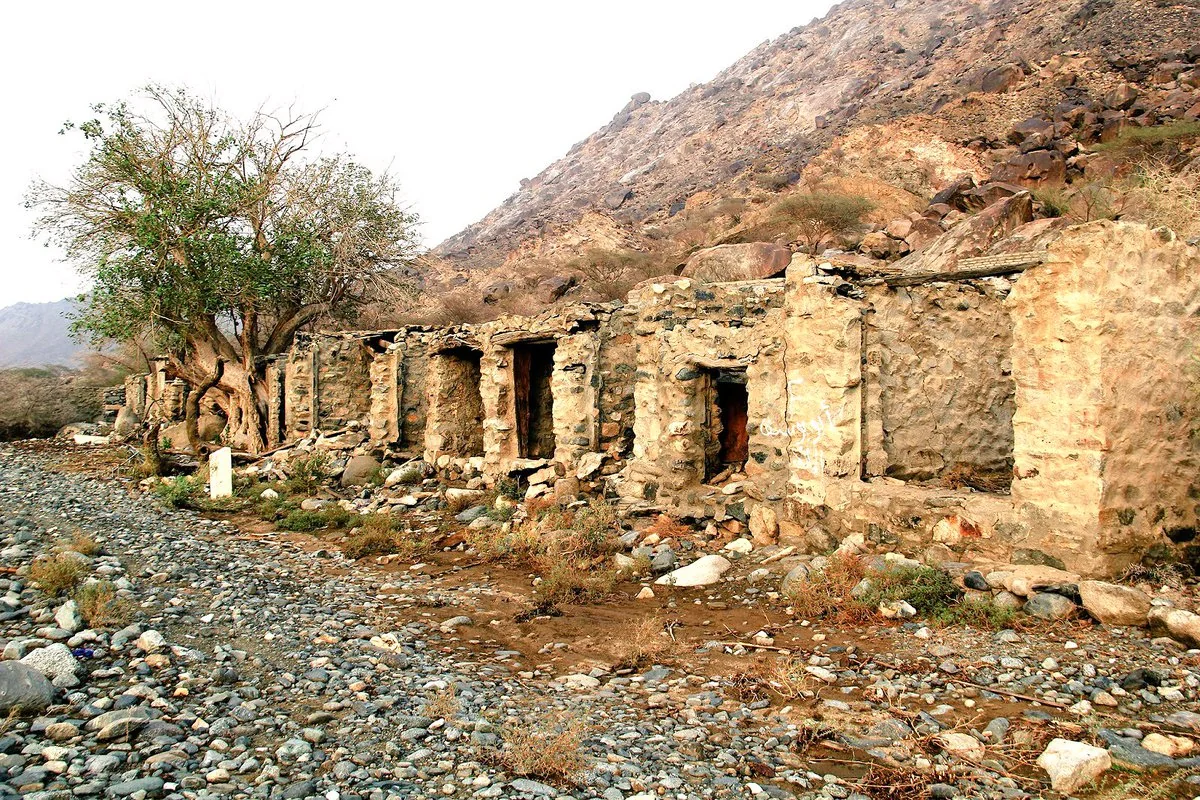
Souq Hubasha: An Illustrious History and Prophetic Presence
· It was the direct reason for the compilation of the most extensive geographical dictionary, Mu'jam al-Buldan by Yaqut al-Hamawi.
· Among the visitors to Habasha Market were Mudadh al-Jurhumi, King of the Arabs, al-Shanfara, and Kathir Azza.
· Various tribes frequented the market for trade, arbitration, settling disputes, ransoming captives, and other purposes.
Conditions of Knowledge: Special
Among the famous markets that Arabs regularly frequented was Habasha Market, which is considered one of the archaeological landmarks associated with the Prophetic biography and one of the most prominent markets of the pre-Islamic era. Historical accounts indicate that the Prophet Muhammad (peace be upon him) engaged in buying and selling there on behalf of Lady Khadijah (may Allah be pleased with her) before the beginning of his prophethood.
Yaqut al-Hamawi, author of Mu'jam al-Buldan, mentioned in his account of Habasha evidence indicating that the Messenger of Allah (peace be upon him) reached this market, citing what Abd al-Razzaq narrated from Umar, from al-Zuhri, who said: “When the Messenger of Allah (peace be upon him) reached maturity and did not possess much wealth, Khadijah hired him to trade at Habasha Market, a market in Tihamah, and she hired another man from Quraysh to accompany him.”
Habasha: Time and Place:
Geographers and scholars of place names differed over the location of Habasha Market in the Arabian Peninsula, until a specialized Saudi research team succeeded in identifying the market's location in October 2021, following approximately a year and a half of research, fieldwork, and archaeological studies.
There had been disagreement over whether the market was located in Al-Ardiyat Governorate, affiliated with Makkah, Bariq Governorate in the Asir Region, or whether the popular Bani Isa Market in the center of Sabt al-Jarah might have been Habasha Market. Ultimately, according to the research team, the market was located on the southern bank of Wadi Qanuna, in a wide alluvial plain bordered to the east by the Al-Durba Mountains and to the west by the Al-Aram Mountains, extending for approximately 5 kilometers. It is bordered to the south by Jabal Umm al-Ramth, in a broad and level area with abundant water sources and grazing vegetation. Arabs continued to visit Habasha Market from the pre-Islamic era before Islam until the end of the second century AH, specifically until 197 AH.
Al-Azraqi mentioned the following about Habasha Market in his book Akhbar Makkah: “Habasha is the market of al-Azd. It is located in the lands of al-Awsam of Bariq, at the head of Qanuna and Hali in the direction of Yemen. It is six nights from Makkah. It was the last of the markets of the pre-Islamic era to be abandoned. The governor of Makkah would appoint a man over it, who would go there with soldiers and remain there for three consecutive days at the beginning of Rajab, until al-Azd killed its governor, a man from the Ghani tribe, whom Dawud ibn Isa ibn Musa had appointed in the year 197 AH. The jurists of Makkah then advised Dawud ibn Isa to destroy it, and it was abandoned until today. The reason Habasha was mentioned separately from these markets is that it was not held during the pilgrimage seasons or months, but rather during Rajab.”
The market was named Habasha because, when it was active, it brought together a diverse mixture of people from different tribes who came there for trade, arbitration, settling disputes, ransoming captives, and other purposes for which the major seasonal Arab markets were established. In its time, it was no less significant, prestigious, or famous than Souq Ukaz, and was considered its counterpart.
Advantages of Habasha:
One of the most important distinguishing features of Habasha Market was its location along one of the most important ancient trade routes from Yemen to Makkah and then to the Levant. The market became famous for trading in gold, lead, and antimony, in addition to grains, dates, and leather. Like the other Arab markets, it was an important commercial station and a safe place where trade caravans could settle.
Wine was brought to the market from Hajar and Iraq, while al-bazz, embroidered cloaks and textiles, came from Mikhlaf al-Jund. Grains and agricultural products were also displayed, along with honey and ghee from the villages and desert areas of Bariq. The market offered perfumes, various types of weapons, silk, al-wika', footwear, al-musayyar, and al-Adani goods, which merchants brought from their places of production. Many enslaved people captured during raids and the enslavement of children were also offered there.
Habasha was also locally famous for manufacturing and selling food vessels known as al-Sahhaf al-Bariqiyyah. It was also renowned for its salt trade, to the extent that it became the subject of a proverb. Ibn Rifa'ah al-Hashimi (d. 400 AH) said: “Like one who brings salt to the people of Bariq.”
Regarding the prominent Arabs who attended Habasha Market, al-Razqi says: “Among the notable figures who attended Habasha Market was al-Shanfara, whose name was Thabit ibn Aws al-Azdi, author of Lamiyyat al-Arab. The author of Kitab al-Aghani quoted a man as saying: ‘I left al-Shanfara at Habasha Market.’ From the pre-Islamic era, there was also Mudadh al-Jurhumi, the last king of the Jurhum, and Kathir Azza, who mourned Khindhiq al-Asadi, who was buried in the valley of Qanuna.”
Saeed al-Afghani said in his book The Markets of the Arabs in the Pre-Islamic and Islamic Eras:
“This market, Habasha, has rendered a great service to knowledge, benefiting every Eastern or Western researcher, because it was the direct reason for providing us with the most extensive historical geographical dictionary, Mu'jam al-Buldan by Yaqut.”
Among the other famous Arab markets during the pre-Islamic era were Dumat al-Jandal Market, al-Mushaqqar Market, Hajar Market, Amlan Market, Habasha, Suhar, Dubai, al-Shihr, Aden Abyan, Sana'a Market, Hadhramaut, Souq Ukaz, Majanna, Dhu al-Majaz, Hajar, Dayr Ayyub, Bosra, Adhru'at, and al-Hirah. During the Islamic era, there were also markets such as Maddkhal, Basra's al-Mirbad, and al-Mirbad Market.
References:
· Saeed al-Afghani: The Markets of the Arabs in the Pre-Islamic and Islamic Eras
· Wikipedia
· Saudi Press Agency (SPA)