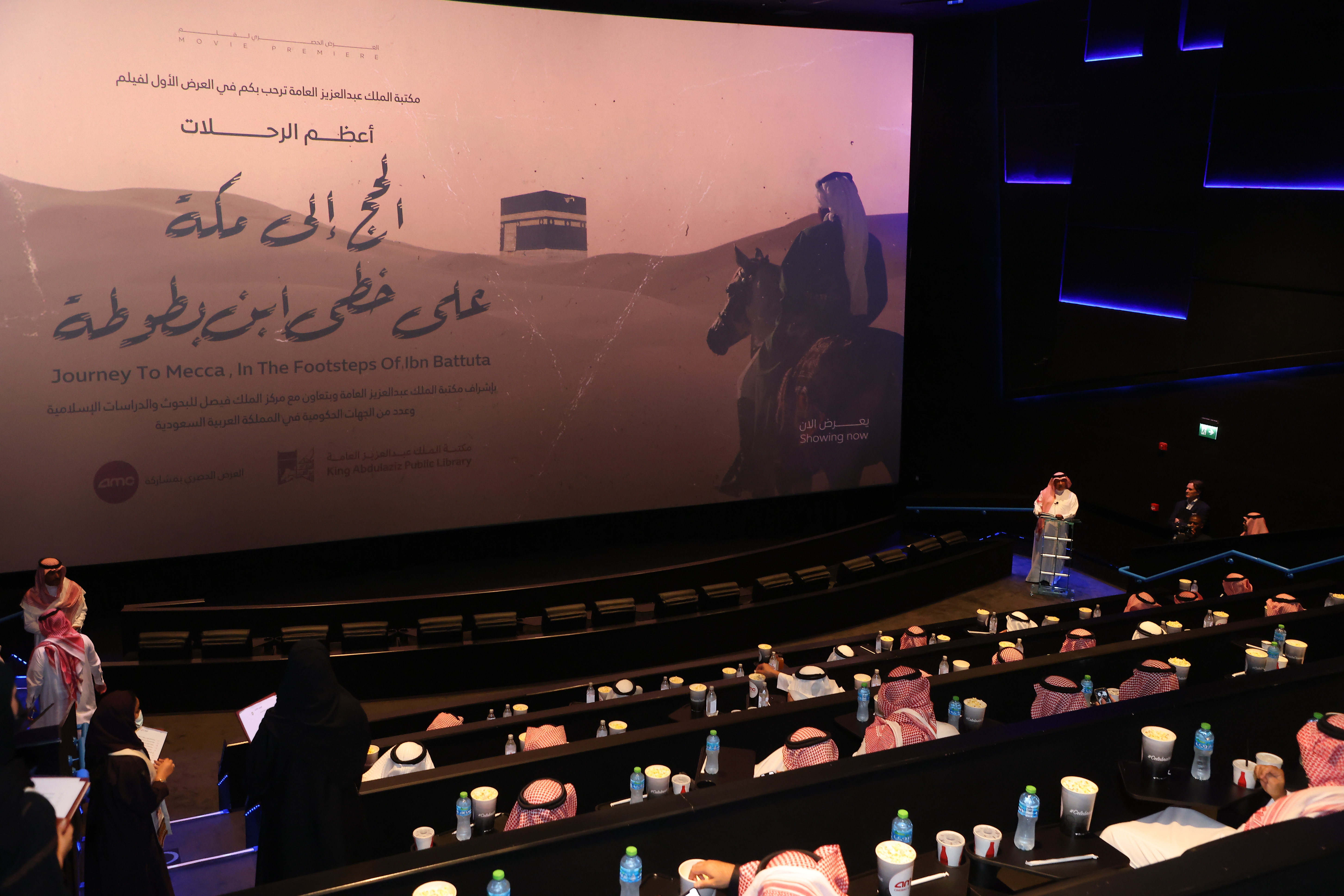
On Audiovisual Heritage Day.. King Abdulaziz Public Library: Diverse Cultural Elements from Manuscripts to Audio and Visual Media
Ahwal Al-Ma’arifa – Special
King Abdulaziz Public Library demonstrates a strong and distinctive commitment to preserving the national, Arab, and Islamic heritage in all its tangible and intangible forms. Its cultural programs, publications, projects, and diverse exhibitions present a vibrant and inspiring picture of its dedication to this heritage, exploring its various aspects and manifestations.
The Library does so by preserving cultural and national memory, safeguarding history and its documents, and protecting identity and the values of belonging. This is the purpose behind commemorating audiovisual heritage, as well as making it available for researchers to benefit from in shaping global memory in general.
The Library holds a distinctive collection of audiovisual heritage, revealed through a rare and specialized collection of photographs, documents, and manuscripts. This is also reflected in the audio and video recordings it preserves of its seminars, exhibitions, and programs, such as Their Experiences in Reading, the film The Last Bedouins, and the film The Greatest Journeys: Hajj to Mecca – In the Footsteps of Ibn Battuta. This is in addition to the documentaries it has produced and the illustrated books it has published.
Every year on October 27, the world celebrates World Day for Audiovisual Heritage, established by UNESCO in 2005. This day aims to protect audio recordings, films, and moving images that face the risk of deterioration and loss, and to document human memory for future generations.
Preserving Heritage:
King Abdulaziz Public Library works to deepen awareness of heritage through an integrated cultural system that includes scientific programs, organizing specialized seminars and lectures, and hosting leading intellectual figures from various countries around the world. It also includes documentation and publishing through the release of works that document every detail of Saudi Arabia’s tangible and intangible heritage, as well as holding in-person and virtual exhibitions that highlight landmarks of Saudi history and Islamic civilization. These initiatives introduce generations and global audiences to the Library’s rare collections and rich knowledge resources.
Audiovisual heritage consists of:
Audio materials: Such as traditional songs, old radio recordings, and historical speeches.
Visual materials: Such as old cinematic films, photographs, and documentary video footage.
Diverse Collections:
Among the most prominent heritage and documentation collections at King Abdulaziz Public Library are rare photographs, as the Library houses an archive containing more than 21,500 historical photographs documenting various stages of the history of the Kingdom and the region.
Its collections also include documents and manuscripts, with thousands of historical documents (more than 123,000 documents) and thousands of original manuscripts (7,721 manuscripts). Other collections supporting national memory include geographical maps (3,300 maps), coins and currency (7,726 pieces), postage stamps (11,750 stamps), artistic miniatures (500 miniatures), paintings (198 paintings), and rare archaeological artifacts (89 pieces).
It is worth noting that World Day for Audiovisual Heritage, as stated on the UNESCO website, is aligned with UNESCO’s constitutional mandate to promote the “free flow of ideas by word and image” and to highlight the role of heritage in building the foundations of peace in the minds of people.
Events are held in many countries and organized by national and regional sound and film archives, broadcasters, museums, libraries, and major audiovisual associations, including the Association of Moving Image Archivists (AMIA), the International Council on Archives (ICA), the International Association of Sound and Audiovisual Archives (IASA), and the International Federation of Film Archives (FIAF).