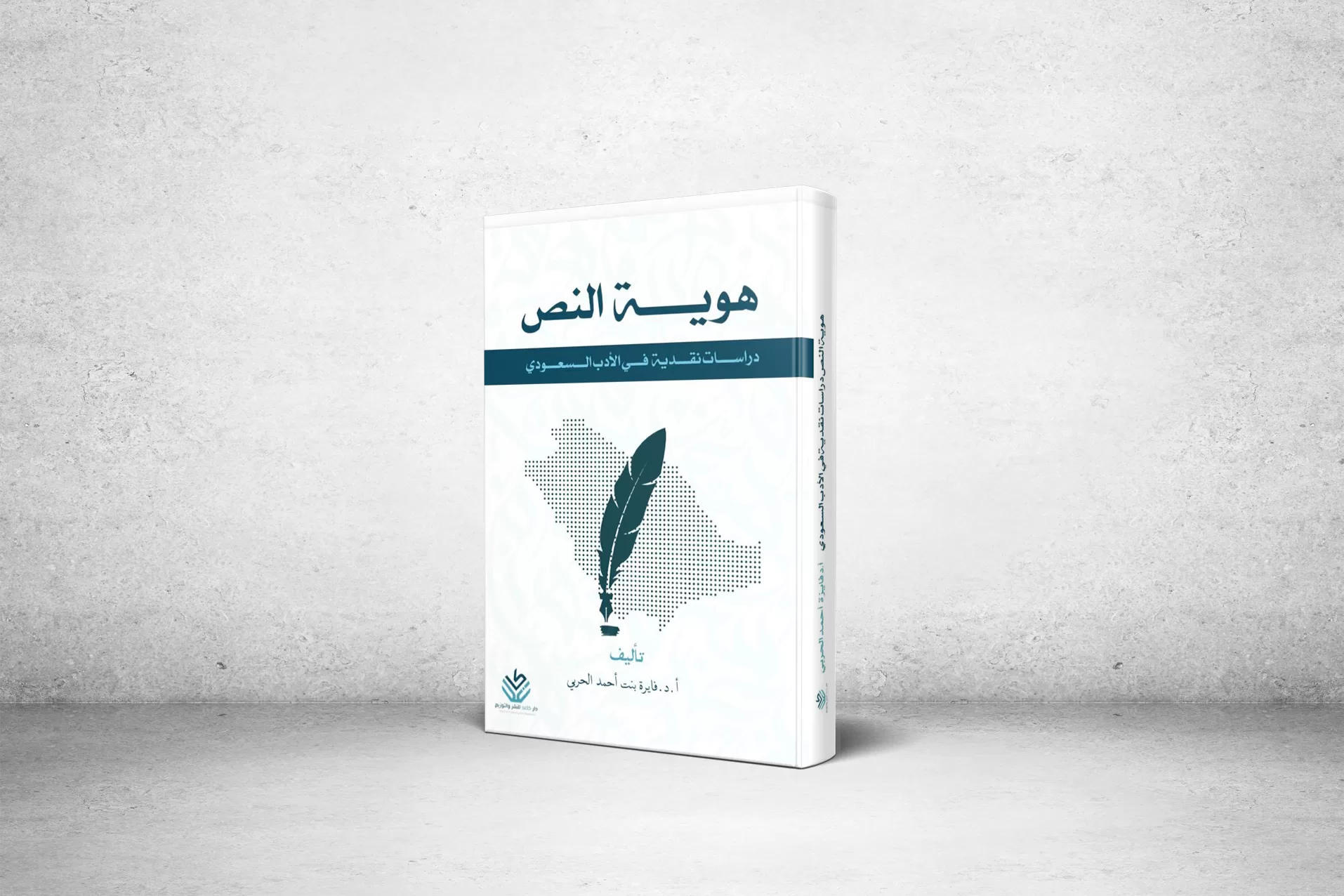
Dr. Fayza Al-Harbi tells Ahwal Al-Ma'rifa: Saudi literature is a value and a cultural and anthropological reference point that embodies human worlds.
Literary identity is an ongoing process of dialogue and expressive and value-based renewal
My book “The Identity of the Text” points to a concept broader than literary genre
The book presents to the reader how cultural and artistic specificity has manifested itself alongside aesthetic and intellectual openness.
Our Saudi literature has coexisted with social, cultural, and intellectual transformations, keeping pace with the development witnessed by the Kingdom
Ahwal Al-Ma’rifa – Special
Professor Dr. Fayza bint Ahmed Al-Harbi, a Professor of Literature at the University of Jeddah, goes beyond the concept of “literary genre,” commonly used in literary and critical research and studies, toward a broader concept: “the identity of the text.” She explains in her interview with Ahwal Al-Ma’rifa that the texts examined in her new book are laden with cultural and anthropological references. She also emphasizes that literary identity is not a fixed given, but rather an ongoing process of dialogue and expressive and value-based renewal.
Professor Dr. Fayza Al-Harbi recently published her critical book entitled: “The Identity of the Text: Critical Studies in Saudi Literature,” which is the subject of this interview. The book contains a collection of new critical perspectives on contemporary Saudi creativity in poetry and fiction. Previously, she published the book “Narrative Storytelling in Contemporary Arabic Poetry.” Here is the interview:
Do you refer to the identity of the text in terms of its literary genre, or are you referring to its style and literary discourse?
The book “The Identity of the Text: Critical Studies in Saudi Literature,” as indicated by its title, refers to a concept broader than literary genre. The selected texts, whether poetry, fiction, or autobiography, are laden with cultural and anthropological references, representing human worlds and the various issues surrounding them. They are also characterized by a linguistic structure rich in aesthetic imagery and artistic forms of expression, whose methods and styles have evolved, moving them from the framework of imitation toward modernity. This demonstrates that Saudi literature is a human value and a cultural reference distinguished by its actual presence, linguistically and intellectually, in everything related to its concerns. At the same time, it is not isolated from its local environment and its distinctive cultural characteristics inherited over time. It has therefore been able to convey diverse representations of the heritage of our Saudi society while remaining receptive to cultures different from our own cultural formation.
Does textual identity here mean establishing the identity of Saudi literature through specific characteristics, or does it mean that it emerges within the context of Saudi creativity in general?
The answer to this question encompasses both meanings, as the book contains a number of studies that differ in their subjects, yet they are united by one common thread: “the identity of the text.” It reveals many of the questions and issues represented by the Saudi literary scene during important turning points in the history of our local literature, as a result of the continuous dialogue between creativity and reality, and between heritage and modernity. This places the Saudi text in its active position and influential role within the landscape of contemporary Arabic literature, while affirming that literary identity is not a fixed given, but rather an ongoing process of dialogue and expressive and value-based renewal. On the other hand, my aim in exploring the lines of creative texts was to identify “the identity of the Saudi literary text” and the characteristics that have given it distinction and uniqueness. These characteristics have been shaped by a system of cultural contexts arising from the Saudi environment and its interaction with the Arab and human worlds. Therefore, the book presents readers with the ways in which cultural and artistic specificity has manifested itself through the selected examples, alongside their aesthetic and intellectual openness.
Why did you focus only on poetry and fiction instead of including examples from other literary genres?
In fact, the focus on poetry and fiction came because they represent the most prominent literary genres in terms of presence and ability to express cultural and human transformations. Poetry, through its metaphorical expressions, condenses multiple dimensions of interpretation that allow texts to be approached through diverse cultural perspectives. Fiction, meanwhile, contains an intellectual and cultural richness that provides readers with space for research and analysis and for presenting multiple perspectives. Nevertheless, the book also includes a study entitled “Saudi Narrative Fiction Between Reality and Imagination,” which examines the novel “Before Memory Betrays” and explores the interplay between narrative and memory according to the autobiographical pact proposed by French critic Philippe Lejeune. I also presented critical readings based on the approaches of reading and reception, including the discourse of critical introductions in the work of Abdullah Abdul Jabbar, the dialectic of critical and methodological discourse at the Dialogue and Narrative Forum, the representation and reception of Saudi women’s literature, and the electronic reception of Saudi poetry, revealing the impact of the digital medium in reshaping the relationship between the text and the reader.
Finally, how do you view the transformations taking place in Saudi literature?
In fact, I view them as distinctive and unique, because our Saudi literature has coexisted with social, cultural, and intellectual transformations, keeping pace with the development witnessed by the Kingdom. It has moved beyond traditional forms to keep pace with modernization and modernity in terms of literary genres, subjects, intellectual perspectives, linguistic structures, and artistic forms. These transformations have contributed to the emergence of literary voices that play an active role on the literary scene and have produced creative experiences that serve as models for others. Some have even achieved international recognition, including, but not limited to: Ghazi Al-Gosaibi, Ahmed Al-Saleh, Mohammed Al-Thubaiti, Saad Al-Humaydin, Abdo Khal, Raja Alem, Thuraya Al-Aridhi, and Mohammed Hasan Alwan. These writers led stages of literary renewal that represented the identity of thought and language, making their work a reflection of the Saudi literary scene and the openness of its literary texts to issues concerning the human self and collective consciousness.