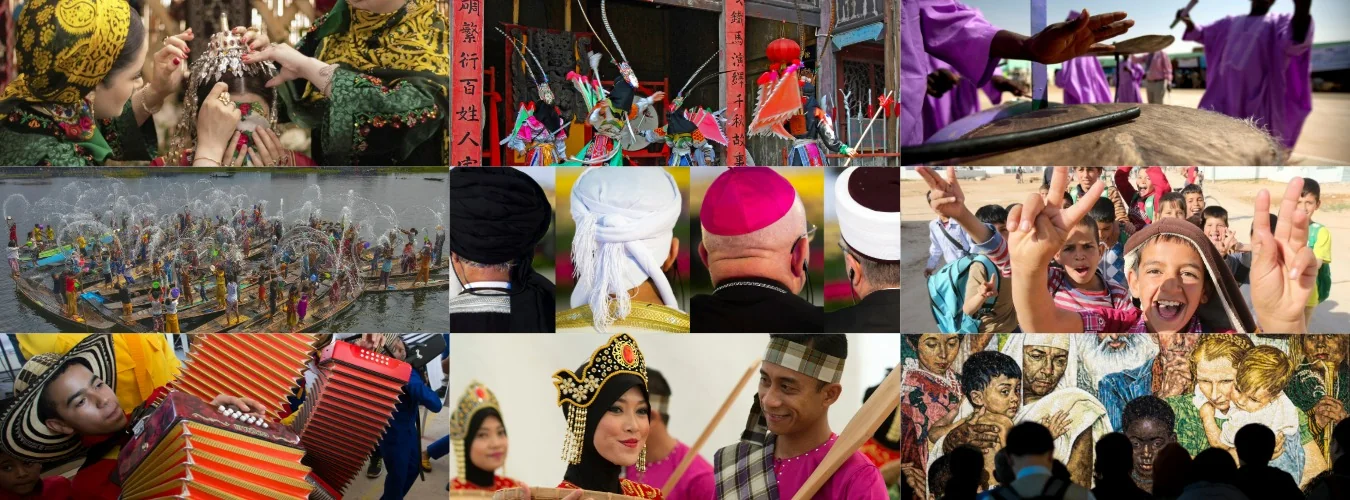
June 10th marks the day when cultures across the globe celebrate the International Day of Dialogue among Civilizations and its diverse human character.
Ahwal Al-Ma'rifa – Special
Every year on June 10, the world observes the International Day of Dialogue Among Civilizations. In an increasingly changing and interconnected world, dialogue among civilizations has become more important than ever. Amid the complex crises facing humanity—including widening gaps in peace, development, trust, and governance—the world stands at a historic crossroads marked by growing instability and profound transformation. The need for solidarity, dialogue, and cooperation has never been more urgent. Dialogue among civilizations is one of the most effective ways to combat discrimination and prejudice, promote mutual understanding and trust, strengthen relations among nations, and foster global solidarity.
In his message marking the International Day of Dialogue Among Civilizations, United Nations Secretary-General António Guterres said: "The United Nations was founded on a fundamental conviction: that dialogue is the path to peace. On this occasion, as we celebrate the International Day of Dialogue Among Civilizations, we reaffirm that conviction and recognize the rich diversity of civilizations as a powerful force for promoting understanding and solidarity around the world."
A Rich Civilizational Heritage:
Human civilization is the product of numerous civilizations and cultures that have flourished throughout history in different parts of the world. Some of the world's oldest civilizations date back more than 7,000 years, including the Chinese, Assyrian, Babylonian, Sumerian, Phoenician, and ancient Egyptian civilizations, as well as the Greek and Roman civilizations. The history of civilization in the Arabian Peninsula stretches back more than 10,000 years. Ancient kingdoms and societies that emerged across many regions also contributed to the development of rich civilizations in India, Yemen, Japan, North Africa, and elsewhere.
Modern civilizations, meanwhile, have been shaped by technological and scientific advances, particularly in Europe, the Americas, and Japan. Yet even these contemporary societies continue to draw upon the values and heritage of the past. This rich diversity of human civilizations underscores the importance of sustained dialogue among nations and peoples around the world.
Strengthening Peaceful Coexistence:
Dialogue among civilizations goes beyond raising awareness of and appreciation for shared universal values. It also helps strengthen peaceful coexistence based on mutual respect. Dialogue serves as a bridge for building common ground and addressing the pressing challenges of our time. In doing so, it contributes to advancing global peace, improving human well-being, and promoting development and progress.
On June 7, 2024, the United Nations General Assembly adopted Resolution 78/286, proclaiming June 10 as the International Day of Dialogue Among Civilizations. The resolution was introduced by China and supported by more than 80 countries. It recognizes all civilizational achievements as "the collective heritage of humanity." It also emphasizes the importance of respecting civilizational diversity and highlights the "critical role of dialogue" in preserving global peace, promoting shared development, improving human well-being, and advancing collective progress.
The resolution further recognizes the fundamental role of dialogue in raising awareness of and fostering understanding of universal values, as reflected in the Charter of the United Nations and the Universal Declaration of Human Rights. It reaffirms that the achievements of civilizations form part of the shared heritage of humanity.
References: