Rare Icons with Universal Motifs: King Abdulaziz Public Library Showcases the Art of Miniatures
Knowledge Affairs – Special
If you have ever visited the King Abdulaziz Public Library in Riyadh and begun walking through its halls and corridors, you will immediately notice glass display cases exhibiting selections of manuscripts from the library’s collections and rare holdings. You will also notice shelves displaying some of the library’s most prominent publications, including encyclopedias and elegant illustrated books showcasing features and aspects of Saudi history, the social history of life in Saudi Arabia, and a variety of books covering different fields.
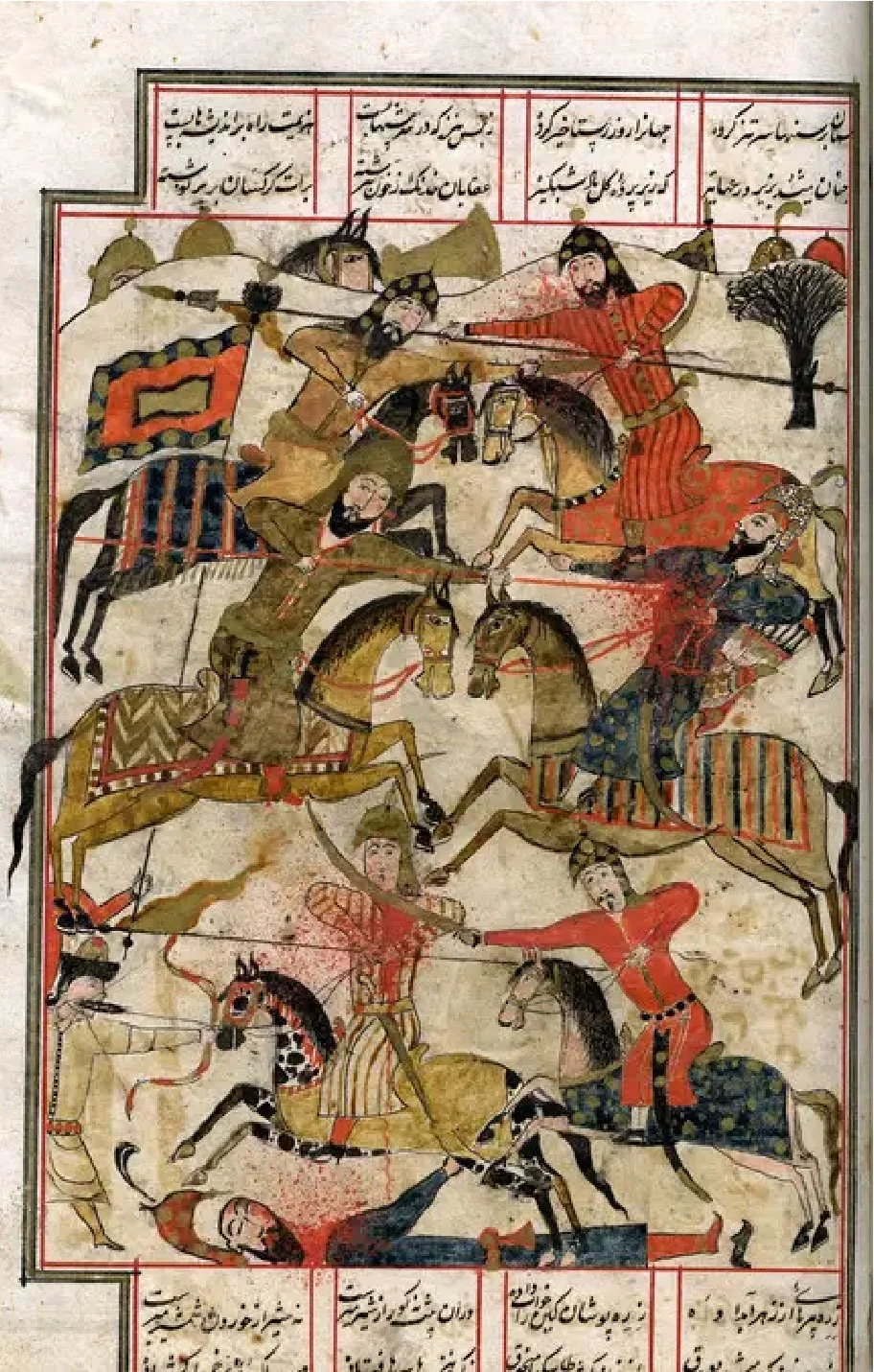
What is particularly striking among these displays, however, is the presence of a number of Arab and Islamic miniatures, representing this ancient, colorful, and ornamented art form in which Muslim artists excelled across different regions, lands, and Arab and Islamic cities. The library displays dozens of miniature artworks from its collections, presented either as individual plates, on the pages of illustrated books, or within distinguished heritage books.
Miniatures refer to small-scale artistic productions characterized by precision in drawing and coloring. The term is generally applied to colored works and other written documents decorated with images, calligraphy, or ornamented margins on wood, ivory, bone, leather, cardboard, paper, metal, and other materials. It also refers to the decoration of texts through illustrations or drawings and is considered one of the most important Islamic arts.
One of the principal functions of miniatures is to represent an idea in miniature form and through color. They have preserved for us images of life and the environment, customs, rituals, traditions, patterns of behavior, celebrations, historical events, climate, architecture, clothing, and the arts. Miniatures may also be described as documents of their age, as they recorded events much like filmed images do today. Artists of that era depicted events with precision, including what took place in cities, their architecture, portraits of sultans, and other subjects.
Collections and Ornamentation:
The King Abdulaziz Public Library possesses a large number of manuscripts and books containing this ancient Arab-Islamic art: the art of miniatures and decorative composition based on drawings, ornaments, and embellishments accompanying books and writing. Miniatures are characterized by precision in drawing and coloring, diversity in images and scripts, and ornamented margins and faces. This was an art mastered by a number of skilled calligraphers and artists who used it to adorn books and manuscripts. Among the most prominent artists and writers in this field were Ibn al-Bawwab, Ibn Muqla, and Yaqut al-Musta‘simi, among others.
The library contains manuscripts featuring miniatures representing different artistic orientations and diverse schools of painting. Among these works are a portrait of Sultan Nader Shah Afshar, illustrations of hunting expeditions, daily activities, and narrated stories. They also include illustrations of sciences, maps and places, plants and animals, holy sites, and roads, as well as a wide range of literary, cultural, medical, scientific, anatomical, and educational subjects.
The miniature has been defined as the formal textual embellishment of imaginative and narrated stories through drawings inspired by a visible reality or a broad imagination, supporting ideas and philosophies through representation and abstraction in vivid colors. The beginnings of miniature art appeared with Ibn al-Muqaffa‘’s Kalila wa Dimna, and it can also be found in Al-Isfahani’s Kitab al-Aghani, Al-Hariri’s Maqamat, and a large number of major books and manuscripts.
The schools of miniature art are divided into the Baghdad school, the Iraqi school, the Persian school, the Timurid school, and the Ottoman school. Influenced by the Persians and Romans, Muslims used drawings and illustrations for explanatory purposes and to clarify information or statistics that might otherwise be difficult for the reader to understand.
Narrative Content:
The art of “miniatures” is based on the use of colors and simple, spontaneous drawings to express certain themes, ideas, values, and events. When books—particularly storybooks or those containing situations and lessons—are adorned with them, the miniatures serve to express the content of the particular book. Thus, the miniature is essentially the colored visual representation of the themes and, for the most part, the narrative events contained within books.
The King Abdulaziz Public Library, as one of the leading institutions in the Kingdom of Saudi Arabia, plays a major role in preserving manuscript heritage, documents, and Islamic arts, including the art of miniatures. It seeks to encourage younger generations to learn this art, enrich their knowledge, and develop their skills in creating artistic designs inspired by elements of Islamic art, which has begun to reassert its presence after having been surrounded by neglect and forgotten. In doing so, it seeks to restore vitality and renewed interest to one of the forms of heritage, whether at the academic and methodological level or among general readers interested in the artistic elements of cultural heritage.
Among the authentic Eastern arts is the art of “miniatures,” which is based on the use of colors and simple, spontaneous drawings to express certain themes, ideas, values, and events. When books—particularly storybooks or those containing situations and lessons—are adorned with them, they come to express the content of the particular book. Thus, the miniature is essentially the colored visual representation of the themes and, for the most part, the narrative events contained within books.
King Abdulaziz Public Library Explores the Culture of Miniature Art
If you have ever visited the King Abdulaziz Public Library in Riyadh and begun walking through its halls and corridors, you will immediately notice glass display cases exhibiting selections of manuscripts from the library’s collections and rare holdings. You will also notice shelves displaying some of the library’s most prominent publications, including encyclopedias and elegant illustrated books showcasing features and aspects of Saudi history, the social history of life in Saudi Arabia, and a variety of books covering different fields.
What is particularly striking among these displays, however, is the presence of a number of Arab and Islamic miniatures, representing this ancient, colorful, and ornamented art form in which Muslim artists excelled across different regions, lands, and Arab and Islamic cities. The library displays dozens of miniature artworks from its collections, presented either as individual plates, on the pages of illustrated books, or within distinguished heritage books.
Miniatures refer to small-scale artistic productions characterized by precision in drawing and coloring. The term is generally applied to colored works and other written documents decorated with images, calligraphy, or ornamented margins on wood, ivory, bone, leather, cardboard, paper, metal, and other materials. It also refers to the decoration of texts through illustrations or drawings and is considered one of the most important Islamic arts.
One of the principal functions of miniatures is to represent an idea in miniature form and through color. They have preserved for us images of life and the environment, customs, rituals, traditions, patterns of behavior, celebrations, historical events, climate, architecture, clothing, and the arts. Miniatures may also be described as documents of their age, as they recorded events much like filmed images do today. Artists of that era depicted events with precision, including what took place in cities, their architecture, portraits of sultans, and other subjects.
Collections and Ornamentation:
The King Abdulaziz Public Library possesses a large number of manuscripts and books containing this ancient Arab-Islamic art: the art of miniatures and decorative composition based on drawings, ornaments, and embellishments accompanying books and writing. Miniatures are characterized by precision in drawing and coloring, diversity in images and scripts, and ornamented margins and faces. This was an art mastered by a number of skilled calligraphers and artists who used it to adorn books and manuscripts. Among the most prominent artists and writers in this field were Ibn al-Bawwab, Ibn Muqla, and Yaqut al-Musta‘simi, among others.
The library contains manuscripts featuring miniatures representing different artistic orientations and diverse schools of painting. Among these works are a portrait of Sultan Nader Shah Afshar, illustrations of hunting expeditions, daily activities, and narrated stories. They also include illustrations of sciences, maps and places, plants and animals, holy sites, and roads, as well as a wide range of literary, cultural, medical, scientific, anatomical, and educational subjects.
The miniature has been defined as the formal textual embellishment of imaginative and narrated stories through drawings inspired by a visible reality or a broad imagination, supporting ideas and philosophies through representation and abstraction in vivid colors. The beginnings of miniature art appeared with Ibn al-Muqaffa‘’s Kalila wa Dimna, and it can also be found in Al-Isfahani’s Kitab al-Aghani, Al-Hariri’s Maqamat, and a large number of major books and manuscripts.
The schools of miniature art are divided into the Baghdad school, the Iraqi school, the Persian school, the Timurid school, and the Ottoman school. Influenced by the Persians and Romans, Muslims used drawings and illustrations for explanatory purposes and to clarify information or statistics that might otherwise be difficult for the reader to understand.
Narrative Content:
The art of “miniatures” is based on the use of colors and simple, spontaneous drawings to express certain themes, ideas, values, and events. When books—particularly storybooks or those containing situations and lessons—are adorned with them, the miniatures serve to express the content of the particular book. Thus, the miniature is essentially the colored visual representation of the themes and, for the most part, the narrative events contained within books.
The King Abdulaziz Public Library, as one of the leading institutions in the Kingdom of Saudi Arabia, plays a major role in preserving manuscript heritage, documents, and Islamic arts, including the art of miniatures. It seeks to encourage younger generations to learn this art, enrich their knowledge, and develop their skills in creating artistic designs inspired by elements of Islamic art, which has begun to reassert its presence after having been surrounded by neglect and forgotten. In doing so, it seeks to restore vitality and renewed interest to one of the forms of heritage, whether at the academic and methodological level or among general readers interested in the artistic elements of cultural heritage.
Among the authentic Eastern arts is the art of “miniatures,” which is based on the use of colors and simple, spontaneous drawings to express certain themes, ideas, values, and events. When books—particularly storybooks or those containing situations and lessons—are adorned with them, they come to express the content of the particular book. Thus, the miniature is essentially the colored visual representation of the themes and, for the most part, the narrative events contained within books.