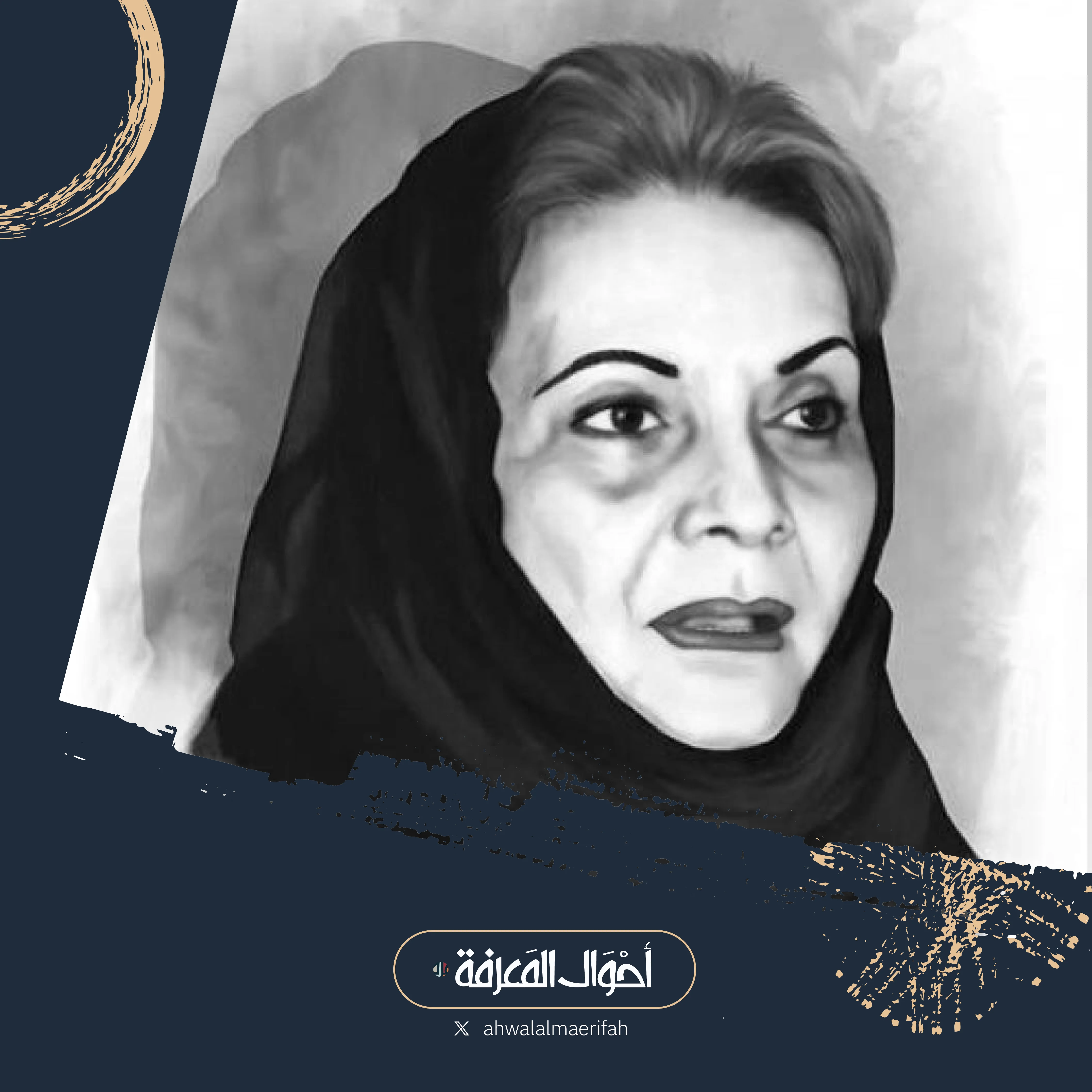
The passing of Thuraya Qabil—a pioneer of Saudi poetry and the first woman in the Kingdom to publish a poetry collection in Modern Standard Arabic—marks the end of a long career rich in diverse creativity.
Dubbed the "Khansaa of the Twentieth Century" by the late, renowned man of letters Mohammed Hassan Awwad, the celebrated Saudi poetess Thuraya Qabil held a distinguished, pioneering position in the Saudi poetic landscape for over six decades. She passed away last Wednesday at the age of 86, leaving behind a rich and diverse creative legacy that spanned poetry, art, songwriting, and tireless social activism. Born Thuraya Mohammed Abdulqadir Qabil in 1940, she received her primary education in Jeddah before moving to Beirut, where she completed her secondary schooling at the National College (*Al-Kulliyah Al-Ahliyya*). It was there that her poetic voice took shape; she published poems in Arab newspapers such as *Al-Hayat* and *Al-Anwar*, launching her literary journey beyond the local sphere at an early stage. She worked in journalism, becoming a writer with a dedicated audience and significant influence. Beyond journalism, she was a lyricist whose verses—imbued with romantic sensibilities—profoundly shaped the artistic and aesthetic evolution of Saudi poetry. She garnered widespread acclaim, particularly through her songwriting. Her debut collection, *Al-Awzan al-Bakiyah* (The Weeping Meters)—published in Beirut in 1963—marked a milestone in the pioneering of Saudi poetry, as it was the first collection in Modern Standard Arabic by a Saudi woman to be published under her own name. She also released a selection of her poems titled *Tilka Zilali* (Those Are My Shadows). Among the titles bestowed upon her are "Icon of Lyrical Poetry" and "Voice of Jeddah." According to Wikipedia, the poet Thuraya Qabil was born in the grand Qabil family home in the Al-Mazloum neighborhood of historic Jeddah; her name is linked to one of the city's oldest and most prestigious commercial thoroughfares, "Qabil Street." Having lost her father at an early age, she was raised and cared for by her aunt, Adila Qabil. She held various positions in the local press, serving as an editor for the *Okaz* and *Al-Riyadh* newspapers, a columnist for several local publications, and editor-in-chief of *Zeina* magazine (1986–1987). She also wrote articles for *Quraish* (Mecca), *Al-Bilad* (Saudi Arabia), and *Al-Anwar* (Lebanon) during the 1960s. In 1963, Qabil published her first poetry collection, *Al-Awzan al-Bakiyah* (The Weeping Meters), in Beirut; it was the first poetry collection by a woman in modern Saudi literature. The collection opens with a dedication from the poet to her aunt Adila, serving as both a tribute and an expression of gratitude. The collection was characterized by a descriptive and emotive poetic style, expressing a lyrical persona that celebrated the details of place and homeland. Among her popular lyrical verses is the line: "After the jest and play, your love has become real; I woke up captivated and spent the evening with a heart laid low. I grow shy if my eyes chance to meet yours; flustered and unsure, I feel as though I could take flight with joy." The literary and artistic communities in the Kingdom and the Arab world mourned the late poet, with numerous newspapers and websites writing about her; Thuraya Qabil represented a female voice that laid the foundation for romantic, emotive song in the Kingdom, leaving behind a poetic and artistic legacy that forms a distinctive part of the memory of Saudi poetic and musical creativity. In her book *Creators of the Written Word: Women and Names* (pp. 49–54), writer Fayza Saad penned an emotive tribute highlighting Qabil’s poetic and literary journey, stating: "Thuraya Qabil was a woman created in a song; born in a song, she lived in a song, until she herself transformed into a song—sung by poetry, sung by words and lyrics." Saad adds: "A woman within a homeland, she is a cascading waterfall of love—composed of words, poems, and sung verses." Thuraya Qabil wrote lyrics that were performed by major artists such as Mohammed Abdu, Talal Maddah, Abadi Al-Johar, Fawzi Mahsoun, Etab, Abdulmajeed Abdullah, and others. Among her most famous songs are: "Min Ba'd Mazh wa La'b" (After Jest and Play), "Ya Man Bi-Qalbi Ghala" (Oh, You Who Are Dear to My Heart), "Jani Al-Asmar Jani" (The Dark-Complexioned One Came to Me), "Min Fatan Bayni wa Baynak" (Who Sowed Discord Between Us?), "Wahishni Zamanak" (I Miss the Time We Shared), and "Ismahli Ya Qalb" (Forgive Me, Oh Heart). Her writing is distinguished by emotional sincerity, fluid language, and profound poetic imagery that resonates deeply with the general reader. Her poems reflect a romantic vision contemplating human and emotional values, while frequently depicting nature—clouds, trees, birds, and the sea. She also blends Standard Arabic with the Hejazi dialect, particularly in lyrical poetry that lingers in the audience's mind, evoking expansive realms of beauty, art, and creativity.