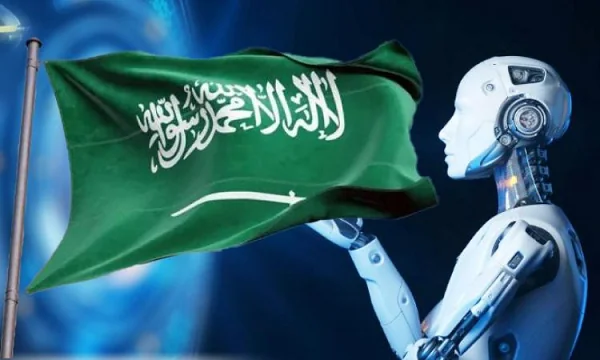
The Kingdom of Saudi Arabia sets its 2026 agenda to the rhythm of artificial intelligence.
Artificial intelligence (AI), in all its scientific and technological forms, has become a part of modern life and is creating a new era for humanity and future generations.
Yesterday, the Kingdom of Saudi Arabia decided to declare 2026 the Year of Artificial Intelligence. AI has now entered almost every area of technology, as well as many scientific, creative, and human fields, making it an unprecedented development in human knowledge.
Artificial intelligence (AI) is a branch of computer science that aims to build systems and machines that can imitate human intelligence. These systems can learn, make conclusions, make decisions, and solve problems independently or with different levels of human control. Its technologies include machine learning (ML) and neural networks, which are used to analyze data, make predictions, and generate content.
Some of the main uses of artificial intelligence include:
Content generation: Tools such as ChatGPT can create text, images, and videos through generative AI.
Smart assistants: Examples include Alexa and Siri.
Transportation: AI is used in self-driving cars and to analyze huge amounts of data to predict outcomes.
Automation and chatbots: AI can automate tasks and provide automated conversations and services.
Pattern recognition: This includes speech recognition and image recognition.
The King Abdulaziz Public Library has organized several seminars and workshops on artificial intelligence. The General Secretariat of the King Abdullah bin Abdulaziz International Award for Translation has also added a new category to the award for Translation in Artificial Intelligence and Emerging Technologies, starting from the award’s 12th edition.
This new category reflects recent scientific developments and their direct impact on human culture and civilization.
The library and the General Secretariat of the King Abdullah bin Abdulaziz International Award for Translation also held a scientific forum in cooperation with Hankuk University of Foreign Studies on September 30 last year. The forum was titled “Translation and Artificial Intelligence: Opportunities and Challenges.”
The forum was held alongside the 11th edition of the award ceremony, which took place in Seoul, South Korea