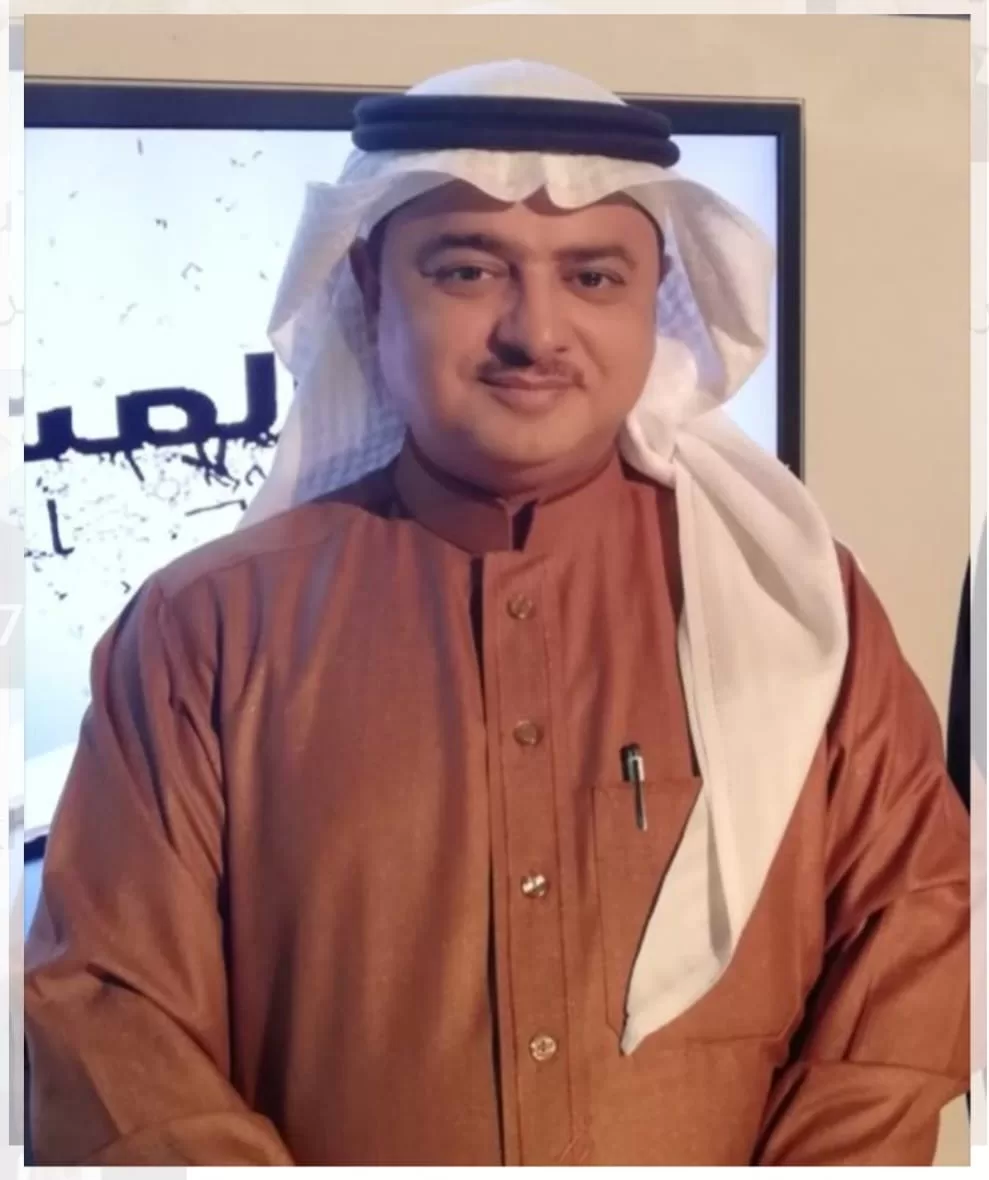
Speaking to Ahwal Al-Ma'rifa about the future of cinema in the Kingdom, Dr. Khaled Al-Khodari stated: "Saudi Arabia is currently the leader in the Gulf in terms of drama production, and film production is on the way."
Ahwal Al-Ma’rifa: Special
In his recent writings and lectures, Dr. Khalid Al-Khudairi has sought to document the transformations taking place in Saudi cinema. To this end, he authored a book that is considered the first of its kind on Saudi cinema, published in both Arabic and English, in addition to his participation in film festivals, most recently serving as head of the Screenwriting Committee at the 19th International Film Festival of Trans-Saharan Film in Zagora, Morocco, where he presented a “Master Class.” He shared his vision of cinema in the Kingdom in a live discussion at the festival, moderated by media personality Khadija Al-Wael, under the title: “Saudi Cinema Today: From Symbolic Presence to Sustainable Industry.” His literary experience as a short-story writer, novelist, and media professional has added significant dimensions to his critical and research contributions to cinema. His novel “A Tremor in the Body” was included in the Library of Congress in the United States, while his book “Influential Letters in the Saudi Press” was included in the German Al-Farabi Library, as well as in other international libraries.
Dr. Khalid Al-Khudairi spoke about Saudi cinema in his interview with Ahwal Al-Ma’rifa magazine, in which he first praised what Ahwal Al-Ma’rifa offers through its distinguished coverage of the Saudi and Arab cultural scene and its influential intellectual dimension, whether in its former print edition or its current electronic edition. Here is the full interview:
What do you consider to be the most prominent historical features of Saudi cinema?
In my opinion, the most prominent features of the history of Saudi cinema can be divided into two aspects:
The first is related to film exhibition and cinemas. Movie theaters had existed since 1950 and subsequently appeared in most regions of the Kingdom. In the Eastern Province, for example, they were primarily associated with the oil company (Aramco) and the areas surrounding it. Later, cinemas began to emerge in many parts of the Kingdom, including sports clubs, literary clubs in their early days, and some private clubs dedicated to film screenings. In Jeddah, for example, there were private cinemas operated by companies specializing in film production and exhibition, in partnership with Egyptian and Syrian companies. As for Saudi film production during that period, it was also connected to Aramco, which produced the first Saudi documentary educational film, titled: “The Flies.” It was associated with the period when malaria was prevalent and aimed to educate the public about the dangers of the disease. Several years later, it was followed by a documentary film about the city of Riyadh.
Film screenings were subsequently restricted and banned in 1979, and this continued for a considerable period.
Film production began to return cautiously at the beginning of the current millennium. Saudi films were being produced outside Saudi Arabia and, more cautiously, inside it, and they participated in Gulf and international festivals. Among the most prominent figures working during this period were Saudi director Haifaa Al-Mansour and the well-known Saudi director Abdullah Al-Muhaysin.
The real resurgence of Saudi cinema began in 2018, with the announcement of the establishment of the Film Commission under Saudi Vision 2030, which seeks to transform culture into a way of life and to benefit from cultural and artistic production as a source of revenue that generates financial benefits for filmmakers and for the country as a whole.
Can a Saudi cinema industry be established that keeps pace with the times?
I object to the premise of the question, because a Saudi cinema industry has in fact already been established and is capable of competing.
Let me explain further: Saudi creators have the advantage of benefiting from the latest developments in global production and starting from where others have already reached.
Saudi Arabia is now the leading Gulf country in television drama production, and its film industry is heading in the same direction.
It is also the leading Arab country in terms of production volume, because Saudi producers today are producing Arab television dramas on a large scale, particularly over the past decade. Cinema is also moving in the same direction, while Saudi technical and technological capabilities and production techniques are among the strongest in this field.
In terms of acting, we are now seeing actors with considerable experience and expertise, as well as remarkable young talents. This has resulted in a number of Saudi films receiving important awards, including at the Oscars and elsewhere, and Saudi films participating in major festivals such as the Cannes Film Festival and others.
There are also festivals being held in Saudi Arabia that have now become destinations sought after by artists and an aspiration for every Arab artist and producer hoping to participate in them. Among them is the Red Sea Film Festival, which has become a major marketplace for Western cinema and international participation.
There is also the Saudi Film Festival, which represents a landmark in presenting, supporting, and promoting Saudi film production and introducing it to the world.
The only thing we are lacking is the script. We still have a crisis when it comes to scripts and screenwriters, even with the existence of scriptwriting workshops and content-development workshops. Nevertheless, we still need to strengthen this area considerably.
We also need to move away from the dominance of influence from, or imitation of, Egyptian writing and Egyptian writers—as they have greater experience and professionalism in this field—and instead present our authentic local identity through our scripts.
How can a radical transformation in cinema be achieved, and does it also require society to change its attitude toward cinema?
Society is moving well toward greater cultural and civilizational awareness. Culture and art are among the most important elements in creating social awareness. The seventh art may appear to everyone to be primarily a form of entertainment, but in reality, it plays a major role in creating change within the human being himself: in his ability to engage with himself, understand himself first, and then develop the ability to coexist with others. It also nurtures a human sensibility that simultaneously creates the capacity for social interaction and for engaging with the essence of one's existence and one's purpose in life.
In the age of media, social networking sites, YouTube, and so on, do you expect cinema to remain influential?
Of course.
Modern technology and social media can influence almost anything except creativity.
This is because creativity comes from the human being and carries a human message filled with human emotion. The more a work is capable of expressing human feelings through whatever idea it presents, the more successful it becomes. This is something that algorithms—and artificial intelligence, whether ChyGpt, AI, or other technologies—cannot truly comprehend or reproduce.
Creative writing and the arts in all their forms will remain, because they combine pleasure and knowledge by addressing the human soul and the mind at the same time, which is something that technology, no matter how advanced it becomes, cannot achieve.
I would like to conclude with a statement by the world-renowned artist “Van Gogh” when he described the three elements that produce art as: “the mind, the heart, and the hand that executes the work.”
It is invention through the mind, feeling through the emotions of the heart, and skill or professionalism carried out by the human hand.