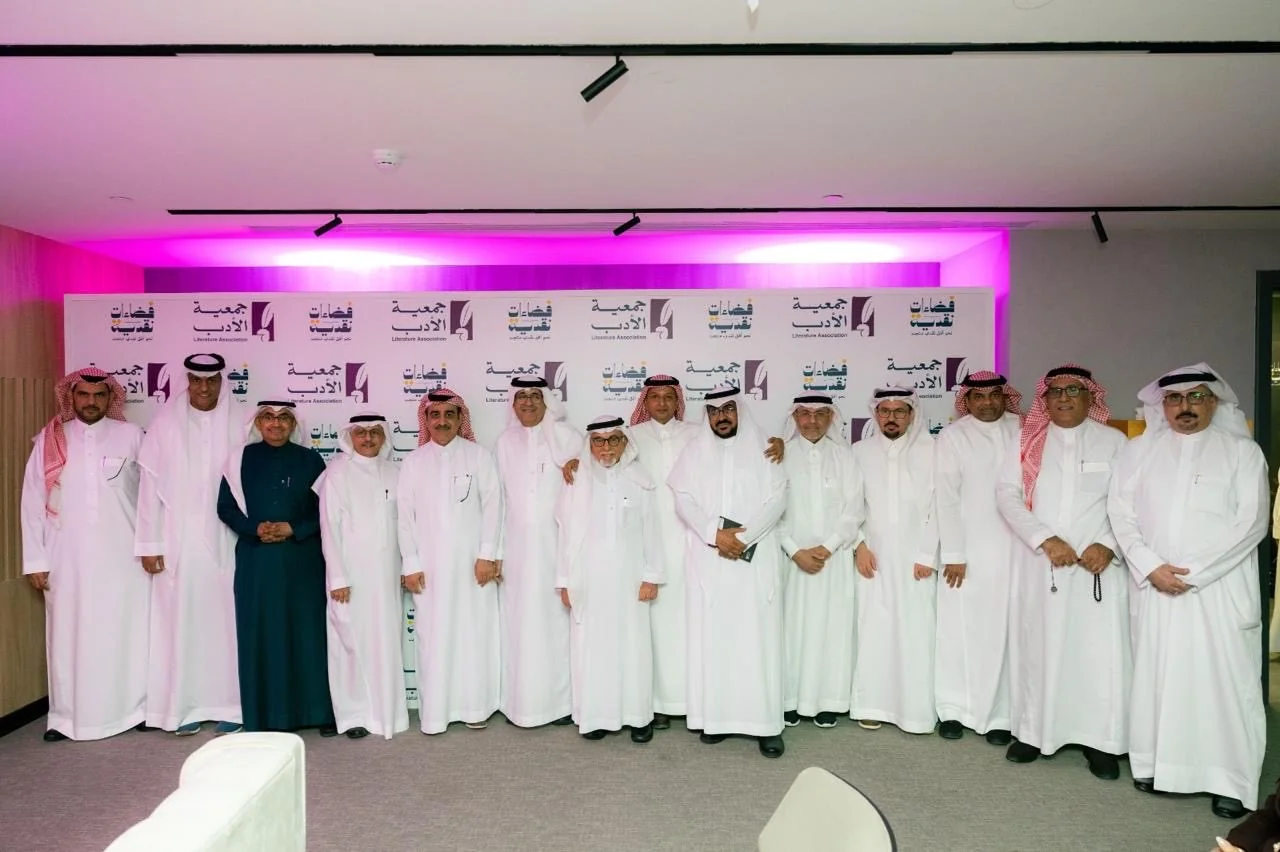
Saudi Creativity: Between the Traditional Platform and the Cultural Café? Al-Shaqha, Al-Rubai, Al-Marwani, Al-Yousef, Al-Jiroudi, and Al-Khodari Chart the Path.
Knowledge Affairs – Special
Multiple Platforms, One Creative Spirit
This is how observers and scholars can discern the transformations in literary reception and the diversification of platforms between the creator and the reader, as well as their developments in accordance with the contemporary cultural moment experienced by everyone. The media have moved the world of speech and writing into broader spaces with greater reach, presence, and influence.
For decades, Saudi writers and creators continued to write, print, and publish, then meet their readers face-to-face through traditional platforms in lectures, seminars, and literary evenings, which flourished during the era of literary clubs in their familiar classical form, as well as through the Saudi Society for Culture and Arts. Today, other avenues have emerged through cultural cafés, podcasts, and small live gatherings that have become a daily feature of the Saudi cultural scene.
How do Saudi writers and literary figures view this scene? Do they prefer the classical platforms, or do they prefer to engage with the present moment and embrace the existence of cultural cafés?
At the outset, writer Mohammed Al-Shaqha, one of the pioneers of the short story in the Kingdom, says:
Cultural centers, or Houses of Culture, are the alternative to the public library established by the Ministry of Education to develop individual culture and help people access information, as well as assist them in conducting specialized research or general studies. They are government entities for recreation and leisure, and venues for investing in and implementing Literary Partner activities and social occasions, utilizing the facilities, theaters, and public libraries they provide.
Al-Shaqha adds: The literary club is a civic entity that produces books, lectures, specialized literary seminars, and general cultural programs. Its sources of income and revenues have diversified, although for half a century its activities relied on government support. No alternative will emerge, even if the names, governmental objectives, and revenue sources are changed and developed.
The Center and the Literary Partner:
Media figure, writer, and poet Dr. Ali Al-Rubai speaks more specifically, saying: I can almost assert that cultural centers and Houses of Culture are extensions of the classical literary institutions that existed previously. However, they have not yet been fully established, as the relevant authorities are working diligently on the physical aspect of these institutions, including everything required in terms of halls, venues, libraries, gardens, and theaters, as well as on the artistic and legislative aspects, in order to give the centers and Houses of Culture an identity aligned with the vision behind their establishment.
Dr. Al-Rubai believes that it would be unreasonable to evaluate experiences that have not yet fully materialized, nor whose activities and premises have been established regularly in all regions. He adds that he hopes the Ministry’s premises in the various regions and cities will be utilized, and that membership regulations will be established for the centers and Houses of Culture, enabling writers and literary figures to conduct their activities and organize their events.
Dr. Al-Rubai concluded by saying: I believe that the Literary Partner is driven by a vision based on closeness to society, so that it can become a partner in events and a creator of a young sensibility that sees literature and cultural activity as a way of life and a renewed spirit.
The Memory of Literary Clubs:
Writer and poet Fatimah Al-Marwani emphasizes that literary clubs are not on the path to disappearing completely. Literary clubs, she explains, remain in existence and are supported within the cultural system, and no official directive has been issued to abolish them.
Fatimah Al-Marwani adds: Clubs represent the “institution”: memory, documentation, critical standards, and continuity. Without them, the cultural scene loses its depth and cumulative character. By contrast, cultural cafés and independent initiatives represent “vitality”: flexibility, rapid dissemination, and the ability to attract new generations.
Cultural cafés have surpassed them in terms of reach and ease of access to the public. However, the numbers are still fairly modest, and most attendees are intellectuals and cultural figures; in the coming days, the goal may be achieved by attracting the general public.
Al-Marwani stresses the necessity of having literary clubs. From her perspective, their continued existence is essential because they perform roles that cafés cannot replace:
Producing and publishing literature, establishing literary foundations and criticism, and building the cultural scene over the long term.
Al-Marwani concluded: Literary clubs will not disappear, but they will no longer remain the sole center of the cultural scene. True development lies in integration between the two, rather than eliminating either one.
Continuous Development:
For her part, media figure and poet Hala Al-Jiroudi called for the development of literary clubs, stating: There is no doubt that Saudi literary clubs are important as official cultural institutions, depending on the direction of their activities, but they require continuous development in order to remain influential, particularly in attracting the younger generation and keeping pace with the times.
They also contribute to preserving literary and cultural identity, especially amid rapid changes, by supporting Arabic literature and promoting reading. These clubs help keep the cultural scene alive, but they are sometimes criticized because some believe their influence is limited in the face of competition from digital platforms and social media. Therefore, we need to revitalize these clubs through practical writing workshops—novels, screenwriting, and digital content—and through interactive meetings instead of rigid lectures. It is also important to combine literature with other fields such as cinema and podcasts.
Literary Associations and Clubs:
Media figure and short-story writer Dr. Khalid Al-Khudari, however, believes that literary clubs have come to an end, expressing this in a single sentence: “They actually ended after being transformed into associations.”
Short-story writer and novelist Khalid Al-Yousef takes a different view, believing that raising the question of literary clubs is no longer acceptable, as he sees the clubs as having ended and the new literary associations having taken their place. It was a transformation, and it is over.
Al-Yousef asks: What can we say about literary clubs when they have become part of the past, as ways of thinking have changed and they have been transformed into associations, with many associations being established and thereby changing the equation?
He explains: There is a Literature Association in Medina, activated by the Ministry of Culture to become a pioneering institution in the Kingdom, and it has begun managing dozens of literary salons and gatherings throughout the Kingdom. There is also the Professional Literature Association, which was established five years ago, and I am a founding member of it. It was established by a decision directly from His Highness the Minister of Culture so that it could serve as the association of Saudi writers—the association responsible for supporting literature throughout the Kingdom. This is the direction in which the association is moving and operating. It now has 62 branches, under the name “Ambassadors of the Professional Literature Association,” in Riyadh, Al Majma'ah, Al Zulfi, Al-Qassim, and likewise in cities throughout Saudi Arabia.
Other associations were subsequently established, including the NALA Association, chaired by Yousef Al-Mohaimeed, which specializes in narrative literature, as well as an association in Al Khobar.