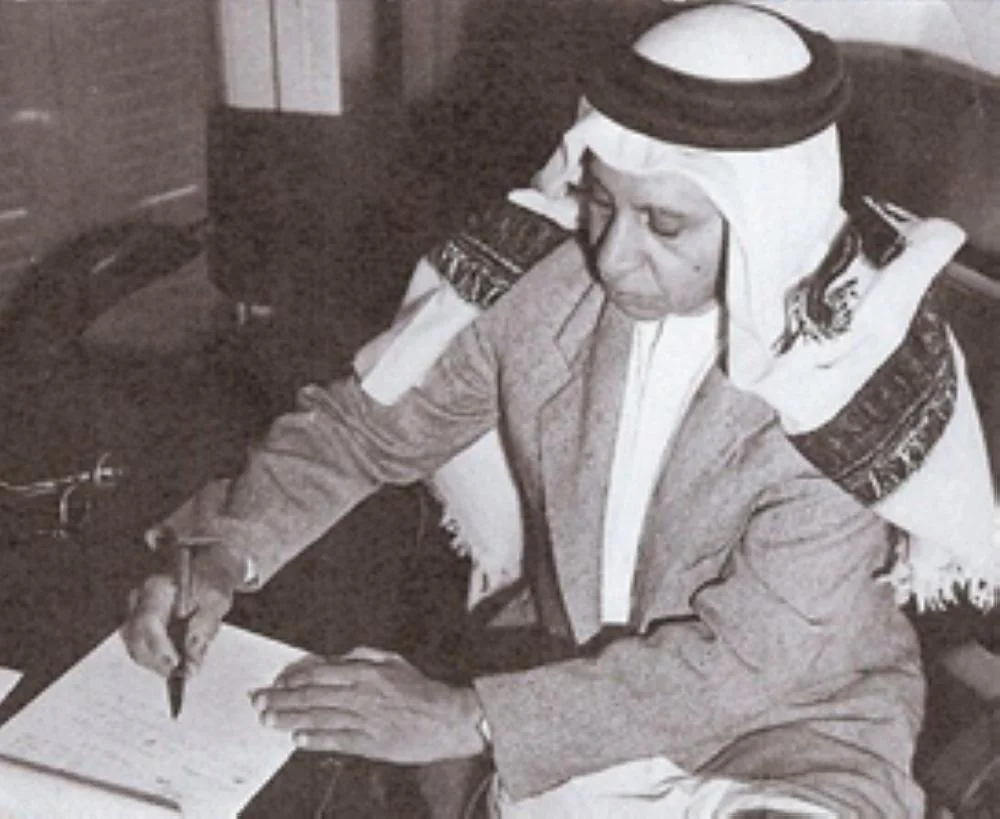
It was an important source in cognitive enlightenment.. 100 years since the publication of the book: (Revealed Thoughts) by Muhammad Hassan Awad
Just as there are influential historical figures who are celebrated on various occasions, there are also influential historical books that maintain a presence in cultural memory and rarely disappear from the cultural scene, no matter how much time passes.
Intellectuals and writers constantly refer to Plato's Republic, the writings of Homer and Aeschylus, Al-Mutanabbi's Diwan and Mu'jiz Ahmad by Abu Al-Ala Al-Ma'arri, the four books of Islamic jurisprudence, Al-Tabari's Tafsir, the Diwan of Al-Mutanabbi, the Diwan of Ahmed Shawqi, The Story of Civilization, Freud's The Interpretation of Dreams, Tolstoy's War and Peace, Victor Hugo's Les Misérables, Sartre's Being and Nothingness, or Dr. Taha Hussein's On Pre-Islamic Poetry in Arab culture. These books, along with hundreds of others, have transcended the boundaries of time and become an existing source of intellectual energy that touches every research work written within their respective literary, philosophical, and intellectual fields.
The book Khواطر Musarraha (Outspoken Reflections) by the Saudi writer and poet Muhammad Hasan Awwad emerged as a cultural phenomenon in Saudi culture following its publication 100 years ago. It was published in 1926, and is described as the first reformist and enlightenment-oriented book in the Arabian Peninsula. The book was published in 1345 AH (1926 AD) and, at the time of its publication, provoked widespread and varied reactions. Awwad was also suspended from work and the book was confiscated because of some of his bold views in criticizing society, prevailing culture, and certain customs and traditions.
The book Outspoken Reflections contains “short, concentrated articles with aims, purposes, and objectives formulated by Professor Muhammad Awwad, through which he sought reform, correction, construction, and raising awareness, as well as spreading independent thought among people in general, particularly among the youth of the Hijaz, and encouraging society as a whole to become a working, industrial, and educated society, equipped with a living and constantly renewed culture of the modern age.” Among the articles included in the book is one in which he criticized the educational method based on memorization and rote learning. It also contains an article entitled “To the Science of Classical Arabic Rhetoric,” as well as other articles including: “From the Window of Imagination,” “O Pretentious Poets,” “A Neglected Nation,” “The Philosophy of Modern Life,” “Literature in the Hijaz,” and “A Conversation with the Scholars,” which is considered the most controversial article in the book. Researcher Hussein Bafaqih published a new edition of the book in 1433 AH, entitled Outspoken Reflections: Followed by the Response of Yusuf Yasin.
Importance of the Book
Ali Jawad Al-Tahir said about the book: “The publication of Outspoken Reflections at that very early stage in the history of literary publishing in the Kingdom, written by a young man who claimed much and ventured into major issues, was akin to a revolution in the surrounding environment. It left a great echo that increased the writer's confidence in himself and also increased his literary ‘arrogance.’”
Abdulaziz Al-Khudr wrote in his book Saudi Arabia: A History of a State and Society: “Many critics have positively pointed to Al-Awwad's role in modernization. In their view, he remained in sharp confrontation with this reality in its various forms and manifestations, calling for a revolution against everything old in thought and life, adopting the methods of modern renaissance, and opening up to the civilization of the age. Al-Awwad's bold ideas and his sharp and sarcastic style astonished and shocked society, and provoked the religious and conservative circles against him. This was the reason he left his position at Al-Falah School, which held historical precedence in the history of education, and he nearly faced imprisonment. On the other hand, Outspoken Reflections was admired by a number of writers, such as Muhammad Surur Al-Sabban, who described it as ‘the Gospel of the intellectual revolution.’ Abdulsalam Al-Sasi described it as a reformist revolution against literature and society, while Muhammad Alam Al-Afghani likened it to dynamite in the intensity of its revolution. Anyone who returns today to his thought and philosophy of enlightenment will find them deeply rooted in this book, which became a defining mark of Al-Awwad's personality and of the thought of an important stage in the literary renaissance of the Kingdom.”
Mohsen Al-Suhaimi wrote: “I read the book and came away with the conclusion that Al-Awwad's reflections did not deserve all this uproar and harshness from his opponents at that time and afterward.”
A Shining Planet:
Dr. Abdullah Al-Madani wrote: After his death in 1980, many people spoke about him, giving him descriptions and titles that he truly deserved. The writer and journalist Dr. Abdullah Manna said of him that he “was neither a meteor nor a passing star in the sky of our literary and intellectual life, but rather a shining planet that occupied people's attention for forty years with his thought and literature.” The writer, historian, and poet Muhammad Hussein Zaidan told us that he “knew Apollo” and appended this title to his poems before the Apollo Poetry Group was established in Cairo. The late writer Abdullah Al-Jafri said, in essence, that he possessed pioneering, new, and bold ideas that provoked many critics and followers. Professor of literature and criticism Dr. Ibrahim Al-Fawzan confirmed that our subject wrote prose poetry, free verse, and blank verse in the 1930s, thus preceding Nazik Al-Malaika, who wrote it in the 1950s, according to her own acknowledgment. The writer and journalist Muhammad Saeed Ba'ashin said that he was “one of the exceptional figures who worked to create an intellectual, spiritual, and material civilization based on scientific imagination and futuristic thought in confronting the accelerating change that dominates all forms of life.” Meanwhile, Ahmed Zaki Abu Shadi, founder of the Apollo School of Poetry, described him as “the leader of the renewal movement in Hijazi poetry and one of those gifted and accomplished poets.”
Awwad began his educational journey by enrolling at the distinguished Al-Falah School, founded by Hajj Muhammad Ali Zainal, which graduated most of the members of the golden generation of writers and intellectuals of the Hijaz and Tihamah, as well as many of their prominent merchants and government employees.
At this school, Awwad received his education from a group of teachers who later became well known in the fields of literature and poetry. Immediately after graduating, he was appointed as a teacher at Al-Falah School, particularly because he had demonstrated outstanding character, brilliance, and distinction from an early age. Evidence of this includes the fact that he began composing poetry when he was no more than 11 years old, and that he wrote the texts of his first works in 1925, while still very young. Later, Awwad was forced to leave the teaching profession in Jeddah and work in Makkah in the Printing and Publishing Department. He then returned to Jeddah, where he worked as head of the Commercial Court's clerical department under the leadership of the late Sulaiman Qabil, and as an investigator in the Judicial Department of the Public Security Administration in Al-Hamidiya, north of Makkah. During his latter position, he contributed, together with two of his young contemporaries, Abdulwahab Ashi and Muhammad Hasan Al-Faqih, to managing and editing the newspaper Sawt Al-Hijaz when it first appeared in 1932. When Sawt Al-Hijaz was transformed into the newspaper Al-Bilad Al-Saudiah, he also managed its editorial department. He was then appointed general manager of the Printing and Publishing Corporation in Jeddah and participated in establishing the Okaz Press and Publishing Corporation in Jeddah during the 1960s. He had previously contributed to editing the magazine Al-Nidaa Al-Islami, which was published in Makkah during the 1930s.
Footnotes:
· https://web.archive.org/web/20170910035512/http://www.alriyadh.com/1622101
· https://web.archive.org/web/20200131183749/https://www.okaz.com.sa/local/na/1598105
· https://web.archive.org/web/20200131183742/https://www.alarabiya.net/ar/politics/2020/01/27/%D8%
· https://web.archive.org/web/20200131183728/http://www.al-jazirah.com/culture/25072005/zakarah21.htm
· [https://ar.wikipedia.org/wiki/ _](https://ar.wikipedia.org/wiki/ _)