Hamad Al-Rashidi: The Hijaz Maqam and the Memory of Najd
Ahwal Al-Ma'rifa – Special
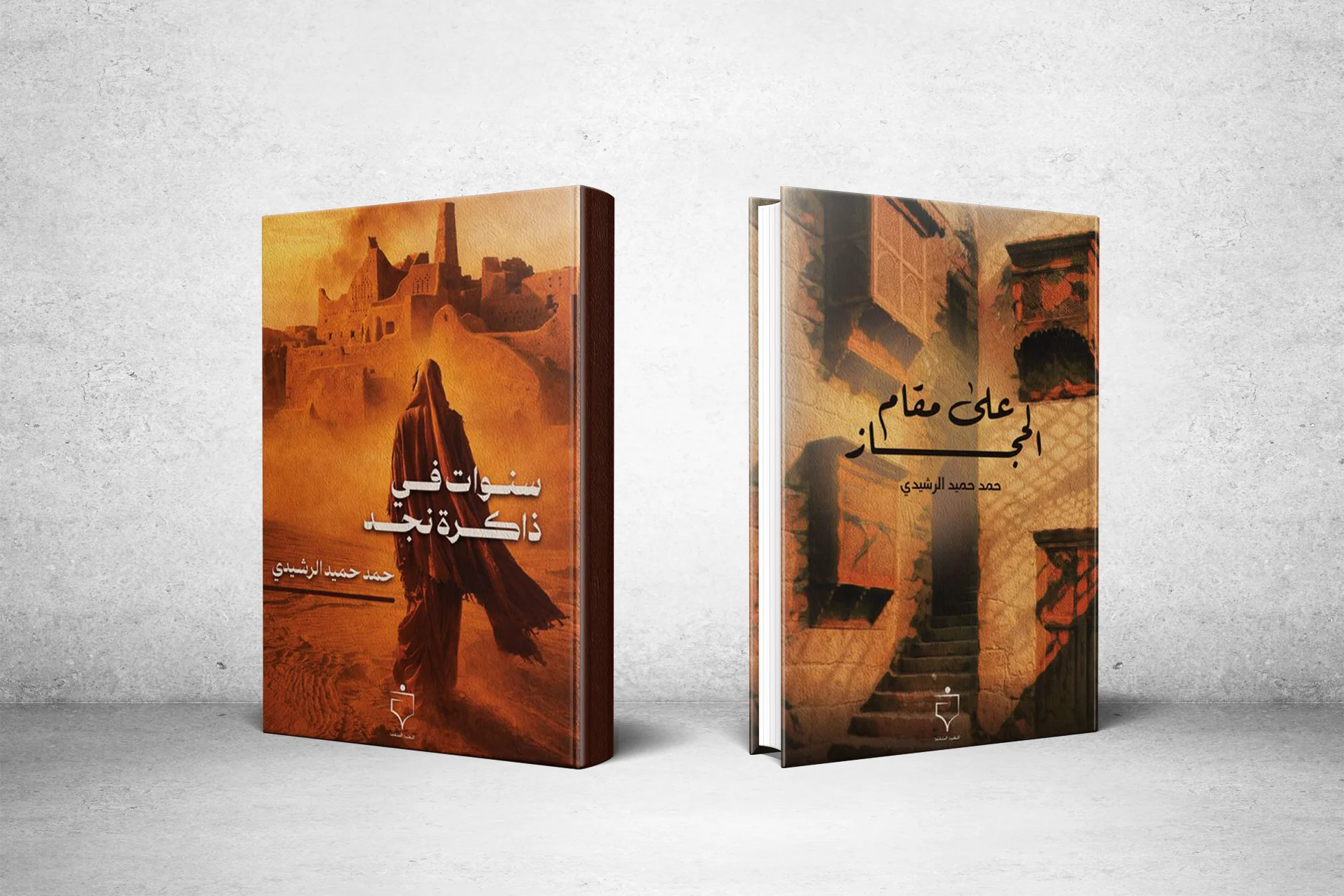
Writer and researcher Hamad Hameed Al-Rashidi continues his research journey, which began more than a quarter of a century ago, exploring the memory of place in Saudi Arabia and bringing its diverse cultural components back into focus—at times by documenting aspects of its history, and at others by uncovering elements of its heritage. In this context, he has recently published two books, both appearing in their first editions in 2026. The first, titled On the Maqam of the Hijaz, is a collection of historical stories from the Hijaz region in earlier times. Although based on real events, the author has infused them with elements of literary style and artistic imagination, while making certain creative adjustments that do not compromise their realism, credibility, historical value, or significance. Some of the place and character names in these stories are fictional and drawn from the author's imagination, and any resemblance to real names or places is purely coincidental. In this way, the stories move beyond their factual foundations into an imaginative dimension that places them within the realm of narrative fiction.
The book, which comprises 108 pages, contains ten stories, including Red Sugar, Al-Karantina, With Mr. Adam Again, The White Head, Safar Barlik (1915), Sheikh Musaad's Farm, Al-Damer, and The Legend of Al-Nimnim, among others. The stories recount their events in a lively and direct narrative style. The book was published by Al-Nukhba Al-Muthaqqafa Publishing House in Riyadh. The same publisher has also released Al-Rashidi's second book, titled Years in the Memory of Najd, a collection of historical stories from the Najd region. Here too, the author has made creative adaptations to some of the names of people and places, incorporating elements of literary imagination into the narratives.
Drawing on history in creative writing requires this imaginative perspective; otherwise, a creative work risks becoming merely a record of biographies or an archive of events and facts—tasks that belong to the historian. Here, however, the writer transforms events and characters into a different realm, elevating their imaginative, symbolic, and extraordinary dimensions. He mythologizes the events and rewrites them in a way that shifts them from their historical context into the realm of creative expression.
Years in the Memory of Najd contains nine stories, each titled after a particular year or event associated with a specific year: The Year of Snow, The Year of Sugar, The Year of Destruction, The Year of the Solar Eclipse, The Year of the Locusts, The Year of Smallpox, A Rainy Year, The Year of Loufa, and The Year of Cold.
The stories adopt both realistic and, at times, symbolic modes of narration. For example, the story The Year of Snow opens as follows:
"The year is 1392 AH. The place: the city of Riyadh.
Uncle Salem Al-Ardi, a sixty-year-old man, leaves his home—as he does every morning—for his shop in Al-Deira Market, returning home at sunset with the call to Maghrib prayer. This had been his daily routine for many years. He was one of the longtime residents of Al-Deira, one of the oldest and most well-known historic neighborhoods located in the heart of Riyadh, as it is known."
The book comprises 112 pages and offers a literary documentation of real-life and social stories, while adapting the course of events and the characters according to the artistic purpose of each story.
Hamad Al-Rashidi has previously published 22 books, including Human Geology, Place and History, Critical Approaches, Poets' Twins, and Papers and Pens, in addition to a collection of novels and volumes of poetry.