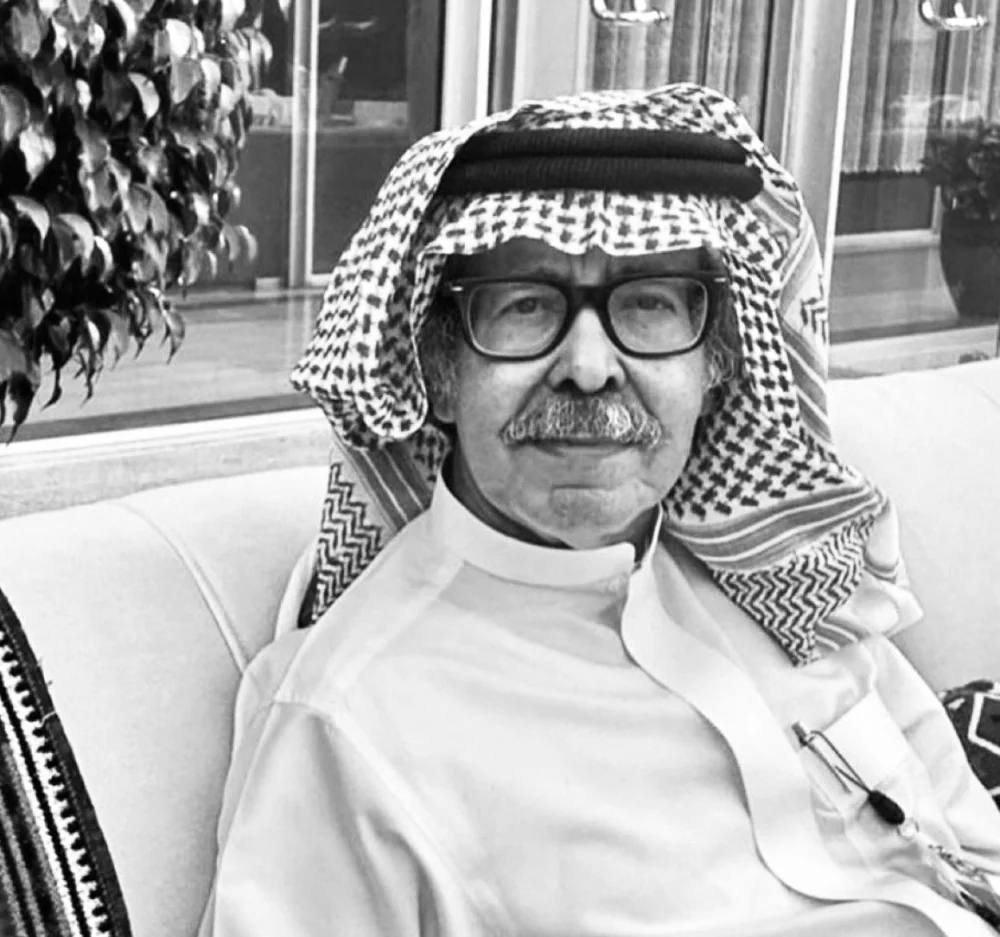
He contributed to modernizing the Saudi cultural landscape: The passing of Saeed Al-Suraihi—a lover of the text and a renovator of literary and critical discourse.
Yesterday, Wednesday (23 Sha'ban 1447 AH / February 11, 2026 CE), Dr. Saeed Al-Suraihi—a distinguished critic and one of the foremost pioneers of "New Criticism" in the Kingdom—passed away at the age of 73. He leaves behind a legacy rich in literary, critical, and media contributions, having enriched the Saudi cultural landscape for over four decades through his writings, views, and literary and critical studies. Saudi and Arab literary and cultural circles mourned Dr. Al-Suraihi following the announcement of his death on Wednesday; he had been hospitalized in the intensive care unit after falling ill several months prior. Prince Badr bin Abdullah bin Farhan, the Saudi Minister of Culture, extended his condolences to Al-Suraihi’s family and loved ones via a post on the social media platform X. The Ministry of Media also mourned the writer, critic, and media figure Dr. Saeed Al-Suraihi, whose career spanned decades, during which he was a prominent voice in the Kingdom’s journalism, literature, and criticism sectors. Minister of Media Salman Al-Dosari expressed his condolences, stating: "Today, we bid farewell to the writer, critic, and media figure Dr. Saeed Al-Suraihi—a voice that believed the written word carries responsibility and that criticism is an act of construction, not destruction." A Cultural Figurehead: Saeed Al-Suraihi emerged as a prominent cultural figure representing the literary transformations witnessed by the Kingdom over more than four decades—specifically from the late 1970s through the early 1980s. This period saw the launch of a modernizing movement within the Kingdom that engaged with creative and critical discourse, positioning it alongside the broader Arab modernist movement. This shift was marked by the publication of poetic and literary works that propelled Saudi poetry into a new era of free-verse (taf'ila) writing—such as Saad Al-Humaidin’s collection *Drawings on the Wall* (1977) and, prior to that, poet Fawzia Abu Khalid’s *How Long Will They Kidnap You on Your Wedding Night?* (1974), a seminal work for the Saudi prose poem. It also coincided with the emergence of questions regarding new critical theories in the Arab world—including structuralism, deconstruction, text linguistics, discourse analysis, and stylistics. A critical movement thus took off, shaping a new Saudi cultural consciousness articulated by Saudi critics; key figures who contributed—from the mid-1980s to the present—to establishing this new critical movement included Dr. Abdullah Al-Ghathami, Dr. Hamza Al-Muzaini, Dr. Mansour Al-Hazmi, Dr. Ali Sarhan Al-Qurashi, and Dr. Juraydi Al-Mansouri. They were joined by notable Arab critics based in Saudi universities, such as Dr. Ahmed Kamal Zaki, Dr. Lutfi Abdel-Badi, Dr. Nazir Al-Azma, and Dr. Saad Maslouh. Amidst this climate, Saeed Al-Suraihi’s pen flourished, rising to prominence by embracing this new critical discourse—most notably through his famous academic thesis, *The Renewal Movement in the Language of Modern Arabic Poetry*. This work sparked widespread debate within academic circles at the time and became an iconic reference. ...addressing questions within the Saudi cultural landscape. Saeed Al-Suraihi’s writings focused on enlightening literary and critical consciousness; consequently, his work was characterized by a spirit of renewal—whether he was engaging with Arab heritage, Saudi heritage, or modern literary works. At the same time, he continued to write about broader social realities for the *Okaz* newspaper—a publication to which he contributed for decades. He worked in the paper’s cultural section, served as its acting deputy editor-in-chief, and maintained a regular column titled "The Opinion Is Yours" (*Al-Ra’y Lakum*). He also actively participated in the activities of most Saudi literary clubs and various cultural supplements during their peak periods of literary vibrancy—spanning the 1980s, 1990s, and the early 2000s—particularly at the Jeddah Literary and Cultural Club, while also serving as a key member of several specialized, peer-reviewed journals. **An Affinity for the New:** Dr. Saeed Al-Suraihi aligned himself with "New Criticism" and the movement of creative modernization in the Kingdom. His writings blended a structuralist vision—focusing intently on the text itself rather than the author's life—with semantic and semiological perspectives, as well as discourse analysis and interpretation. This approach is evident in several of his books, such as *Writing Outside the Parentheses* (1987), *Turning Firewood on the Fire* (1994), and *The Veil of Habit: An Archaeology of Generosity—From Discourse to Experience* (1996); the latter engages with cultural discourse and offers an advanced perspective on reading discourse through the lens of cultural studies. Al-Suraihi continued to publish studies and books addressing poetry—such as *The Movement of Poetic Language*; *Thresholds of Spelling* (an analysis of the poetic experience of Mohammed Al-Thubaiti); *The Poetry of Abu Tammam: Between Tradition and the Vision of New Criticism*; and *The Black Poem* (one of his latest works, published in 2023). He also addressed cultural elements with literary, social, and historical significance in works like *The Seduction of the Name: A Biography of Coffee and the Discourse of Prohibition*; *Al-Ruwais*; and *Desert Ideology: Horizons of Renewal and the Question of Suspended Identity*. These and other works reinforced a discourse of renewed vision within the Saudi cultural landscape and promoted the values of inquiry and dialogue. Saeed bin Muslih bin Saeed Al-Suraihi Al-Harbi was born in Jeddah in 1373 AH (1953 CE). He completed his primary, intermediate, and secondary education in Jeddah, and pursued his university and postgraduate studies (specializing in Arabic Language) at the College of Sharia and subsequently the College of Arabic Language at Umm Al-Qura University in Makkah Al-Mukarramah. He spent twenty years in the field of education—two in general education and eighteen at Umm Al-Qura University—and twenty-eight years in journalism, serving in both freelance and full-time capacities. During his tenure at *Okaz* newspaper, he oversaw the cultural, local affairs, international affairs, and executive departments, and served as Assistant Editor-in-Chief. He also wrote a daily column for the paper and contributed to revitalizing critical and literary creativity in the Kingdom through foundational studies that became significant references within Saudi literary life and the local and Arab academic and cultural landscapes.