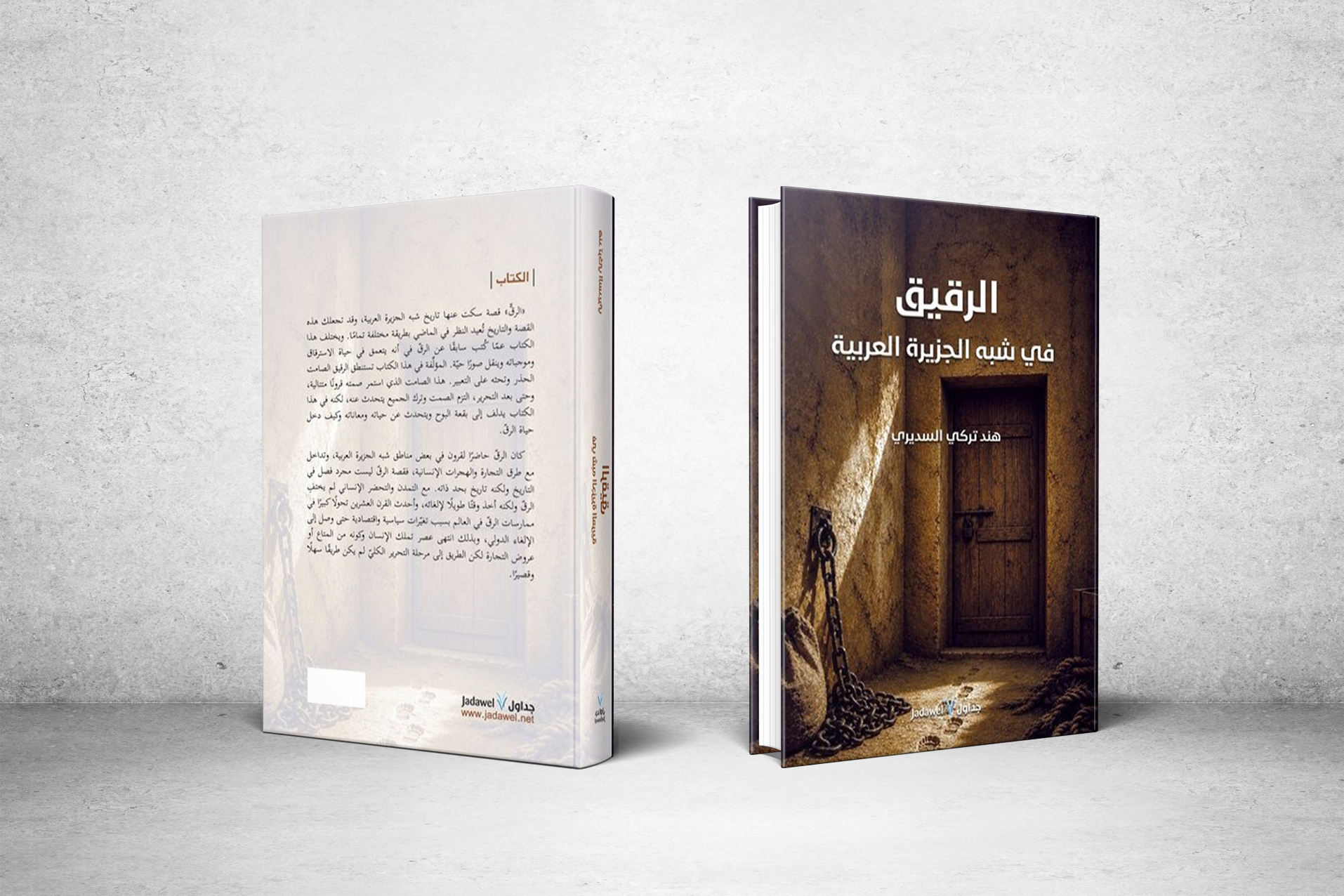
Dr. Hind Al-Sudairi Publishes Her Tenth Book on Slavery in the Arabian Peninsula
Saudi author Dr. Hind bint Turki Al-Sudairi, a professor of English Literature at Alfaisal University in Riyadh, has published her tenth book, documenting a longstanding historical phenomenon that existed in various countries around the world, including the Arabian Peninsula. Migration, travel, and the need for labor contributed to the existence of this phenomenon. The book is titled Slavery in the Arabian Peninsula and was published by Jadawel Publishing and Translation in Beirut.
The book consists of 311 pages. Its author sought to document what had previously remained undocumented: the untold history of enslaved people in the Arabian Peninsula, particularly since this subject had rarely been written about from within the region, apart from some academic studies.
One of the book’s distinguishing features is the author’s reliance on living human sources. She listened attentively to real-life accounts and stories told by people who had experienced the slave trade, including the stories of Saad, Uwaishah, Shamsah, Mabrukah, Mubarakah, Bashirah, and many others. Through these accounts, the author documented the suffering of enslaved people, their courage in confronting their new circumstances, and their positions within society.
The author devoted an entire chapter to explaining, with supporting documents, the efforts made by the Kingdom of Saudi Arabia from the beginning of the Third Saudi State until all enslaved people within its territory were emancipated, detailing the initiatives undertaken to secure their freedom.
Historical Details:
The author presents a range of historical details in the book, examining the slave trade, its routes and pathways through Africa, and the Eastern slave trade. She also explores the treatment of enslaved people in Makkah, Jeddah, Al-Ahsa, Riyadh, Ha’il, and Bisha. The book identifies some of the most prominent tribes involved in the slave trade along the Gulf and Red Sea coasts.
The author also points out that some enslaved people were not excluded from political and economic activities. Some held important positions and could be described as “prominent enslaved figures.” Examples include Bilal al-Hariq in Al-Ahsa, Jawhar, the Emir of Al-Jawf, and Saeed Al-Faisal, the Emir of Al-Dawadmi, among others.
Methodologically, the book adopts an anthropological approach, making it an important historical and social document and a distinctive addition to Arabic literature. It also includes an appendix containing Arabic and English documents. It may be among the earliest books to examine this phenomenon, although it has been referenced in several literary works, including Hulat al-‘Abid by Saudi writer Tariq Al-Haidar, first published in 2009 by Dar Tuwa. This novel explores social transformations in Riyadh. Other relevant works include Wajhat al-Busulah by Noura Al-Ghamdi, Qalb min Batqalan by Saif Al-Islam bin Saud, and Thaman al-Milh by Bahraini writer Khalid Al-Bassam.
Dr. Hind bint Turki Al-Sudairi is a Saudi researcher, translator, and academic. She is the daughter of media figure Turki Al-Sudairi, the late former editor-in-chief of Al-Riyadh newspaper. Her publications include Kan Huna (He Was Here), Ka’in al-Farah wa al-Shi‘r (A Being of Joy and Poetry), Papers from a Journalist’s Bag, and Saudi Folk Tales. She has also translated several works, including Margaret MacMillan’s History: Use and Abuse. In 2025, she received the Princess Nourah Award for Women’s Excellence.