What Did His Daughter Maria Add a Year After His Passing? Saudi Anthropology as Documented by the Italian Orientalist Nallino in 1939, After Two Months of Observation and Documentation
Knowledge Affairs – Special Report
In 1938, the renowned Italian Orientalist Carlo Alfonso Nallino visited the Kingdom of Saudi Arabia for two months. During his stay, he traveled throughout the country and recorded important observations and studies covering several Saudi cities, including Makkah and Jeddah. He wrote about their history, ports, religious, civil, and military architecture, and economic conditions.
He also examined certain anthropological phenomena related to cultural dimensions and traditions, seeking to uncover the underlying patterns embedded within them. A year after his death, his daughter Maria added a number of studies concerning the customs, traditions, and clothing of women in the city of Jeddah.
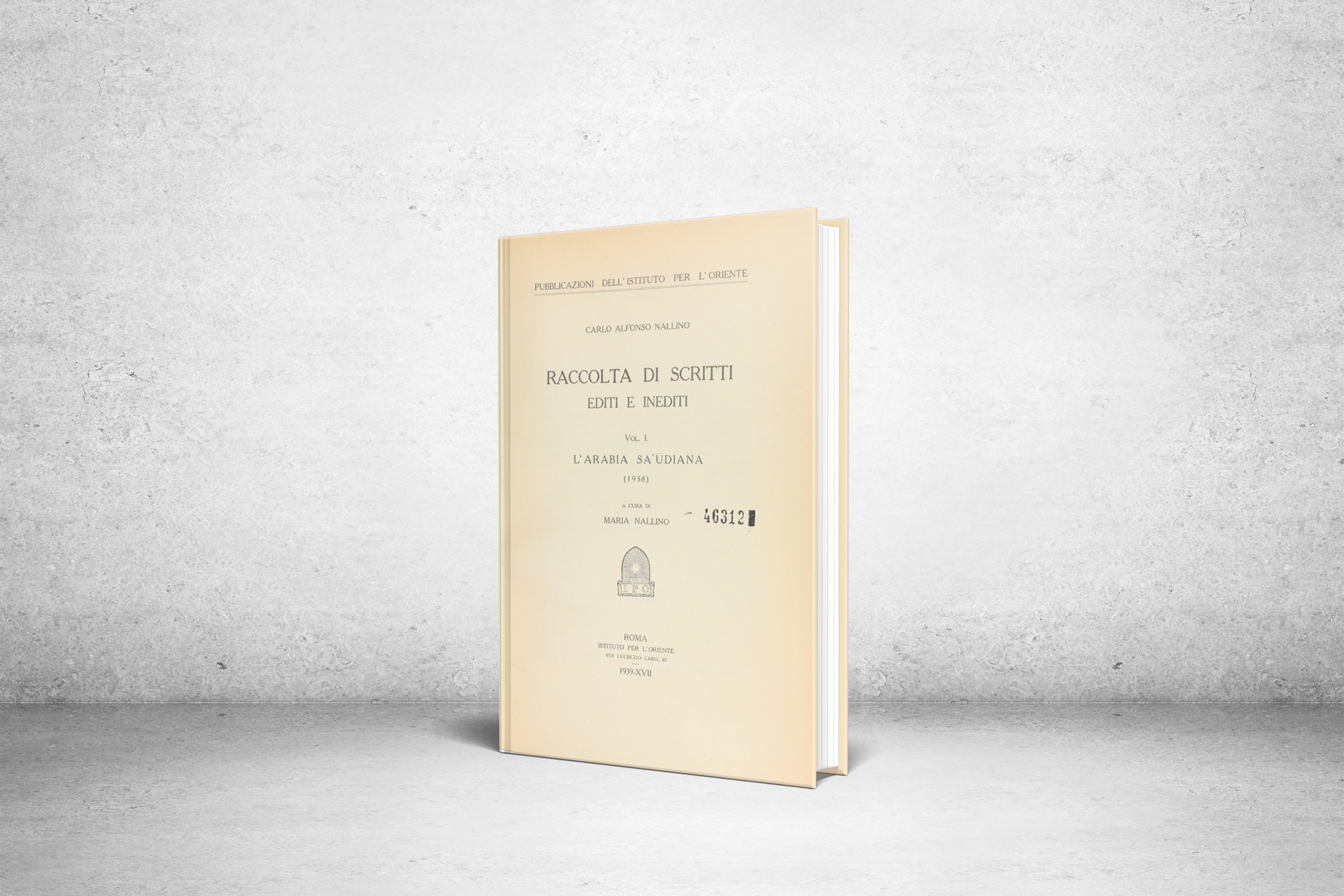
The book, titled The Kingdom of Saudi Arabia, was published in Italian in 1939, one year after his death. It consists of three chapters. The first examines the Kingdom’s political, administrative, and legislative systems, making it one of the important early sources on these subjects during the formative years of Saudi Arabia. In the second chapter, Nallino discusses a range of religious, national, economic, and cultural topics.
The third chapter focuses on Jeddah and its surrounding areas, as well as the journey to Taif. It is divided into three sections. The first, titled “Jeddah and Its Surroundings,” presents historical information about the city and a comprehensive, detailed description of its port, landscapes, public buildings, and various mosques.
The following two sections describe the journey from Jeddah to Taif, passing through Jeddah, Umm al-Salam, Bahrah, Wadi Fatimah, Maymunah, al-Ji‘ranah, Wadi Hunayn, al-Zaymah, al-Sayl al-Kabir, al-Sayl al-Saghir (Ukaz), and Umm al-Hamad. The book also provides descriptions of the city of Taif and its surrounding areas.
The book concludes with texts of Saudi laws, constitutional, administrative, and legislative regulations, as well as treaties and agreements between Saudi Arabia and Great Britain, Italy, and other countries. It ends with three indexes covering personal names and tribes, place names, and Arabic terms. At the beginning of the book is a list of the reference works cited, and the volume also contains a collection of rare photographs taken by Nallino himself.
This book occupies a prominent place among five volumes devoted to Arab-Islamic culture. The series contains numerous photographic plates and constitutes the complete works of the Italian scholar specializing in Oriental studies, Nallino (1872–1938), who published his first works on Arab geography and astronomy at the age of twenty-one.
The volume devoted to the Kingdom of Saudi Arabia, which opened the series, was his final work. The second volume addresses Islam, including its doctrines, sects, and religious orders. The third covers the history of the Arabian Peninsula before Islam, along with Islamic history and institutions. The fourth focuses on Islamic law and the laws of Eastern Christian communities. The fifth explores astrology, astronomy, and geography.