

The King Abdulaziz Public Library highlights the history of Jeddah Islamic Port through photographs taken between 1936 and 1947.
The King Abdulaziz Public Library has highlighted a collection of rare photographs taken 90 years ago at Jeddah Islamic Port, including its gates and coastlines, in 1936. It has also revealed another collection of photographs taken in 1947 and 1972 of the historic port. These photographs represent an important historical visual record, highlighting the significant global role of Jeddah Islamic Port, located on the Red Sea along the western coast of the Kingdom of Saudi Arabia. Today, the port is one of the world’s leading ports, achieving major advances in container handling, loading and unloading, and transshipment. It has evolved from an old port receiving ships carrying pilgrims and Umrah performers bound for Makkah into a global port with international coordinates and connectivity and a significant international presence. Its vital importance has been particularly evident during international crises, as it serves as a major international economic gateway, making it one of the world’s most important ports.
The photographs highlight the large numbers of passengers arriving at Jeddah Port and show large steamships carrying visitors to the Kingdom and to Makkah to perform Hajj. They also show some female pilgrims leaving through the “Jeddah Engine Gate” after arriving at Jeddah Islamic Port. These photographs date back to 1936.
Other photographs show a warehouse near Jeddah Port and workers at the port beside one of the ships. They also depict groups of pilgrims aboard their boats in Jeddah Port, as well as others aboard their ship before reaching the port.
The photographs taken at the port during the 1930s and 1940s take us, through visual memory, back to a variety of historical scenes, transforming them into a tangible form of inspired imagination through which to appreciate the aesthetics of the place and its features. They also illustrate the major historical role of Jeddah Port, where activity has continued uninterrupted since its establishment during the reign of Caliph Uthman ibn Affan in 26 AH (646 CE). The Caliph designated it as the port of Makkah, replacing the old port of Al-Shuaiba. Since then, it has remained a principal gateway for receiving pilgrims from all over the world.
The photographs focus on the port and on travelers and passengers arriving in Jeddah from different nationalities and linguistic backgrounds. In an enlarged panoramic view of the port, we can observe the diverse activities taking place there in 1947, as well as scenes reflecting the daily life of ordinary citizens and a number of vehicles at the port. Among the photographs is a commemorative image of engineer Mr. Mohammed Helmi, the photographer of the Two Holy Mosques, standing with a number of passengers who had arrived at Jeddah Port. Another photograph shows members of the Egyptian honorary delegation while they were in the Kingdom to perform Hajj in 1936. Yet another shows a group of figures wearing different types of attire, ranging from traditional thobes to formal suits, standing in front of one of the ships docked at the port. These scenes highlight the diverse presence of visitors from different countries who came for pilgrimage, Hajj, or Umrah.
Following the development and reopening of Jeddah Islamic Port in 1972, the photographs captured a large number of scenes, including King Faisal, may Allah have mercy on him, speaking with Sheikh Mohammed Omar Tawfiq, Minister of Transport. Other photographs show King Faisal unveiling the commemorative plaque after his arrival and the playing of the national anthem. Another image captures him delivering a speech during the opening ceremony, with a number of princes seated to his right. The photographs also show guests attending the opening ceremony of the Islamic Port and several ships decorated for the occasion docked at the port.
It is worth noting that the strategic location of Jeddah Islamic Port makes it one of the world’s most important ports. Situated along major global shipping routes, it serves as a link between three continents: Asia, Africa, and Europe. It is regarded as the leading port on the Red Sea coast for international maritime trade and the transshipment of containers and goods.



Latest New's
View AllStay informed with the latest updates, announcements, and developments from KAPL.
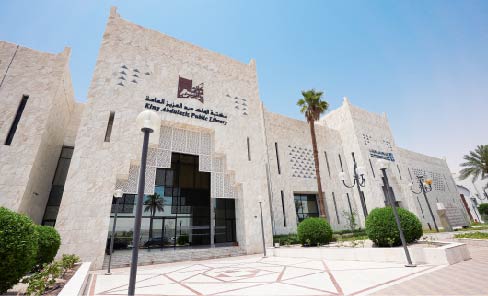
King Abdulaziz Public Library Participates in the International Federation of Library Associations (IFLA 2026) Conference and Exhibition in South Korea
The King Abdulaziz Public Library is participating in the International Federation of Library Associations and Institutions (IFLA) 2026 conference and exhibition—hosted by the city of Busan, South Korea, from August 10 to 13, 2026—as part of its ongoing international presence and its commitment to exchanging expertise and building partnerships with library and knowledge institutions worldwide.
Read More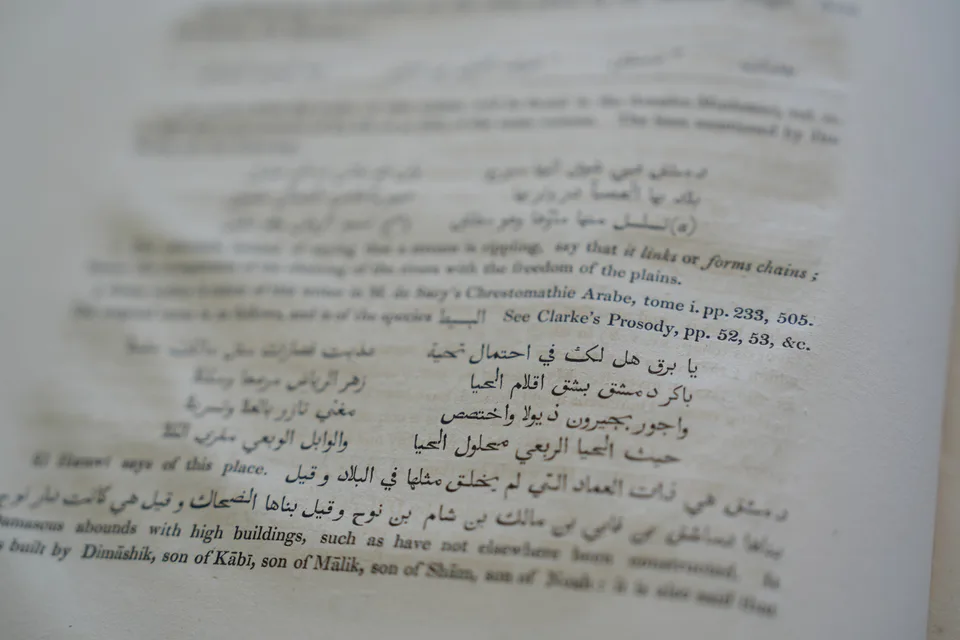
King Abdulaziz Public Library Unveils First Translation of Ibn Battuta’s Travels
King Abdulaziz Public Library in Riyadh has revealed that it has acquired a rare copy of the first printed and widely known English translation of Ibn Battuta’s travels, published 197 years ago, specifically on April 27, 1829.
Read More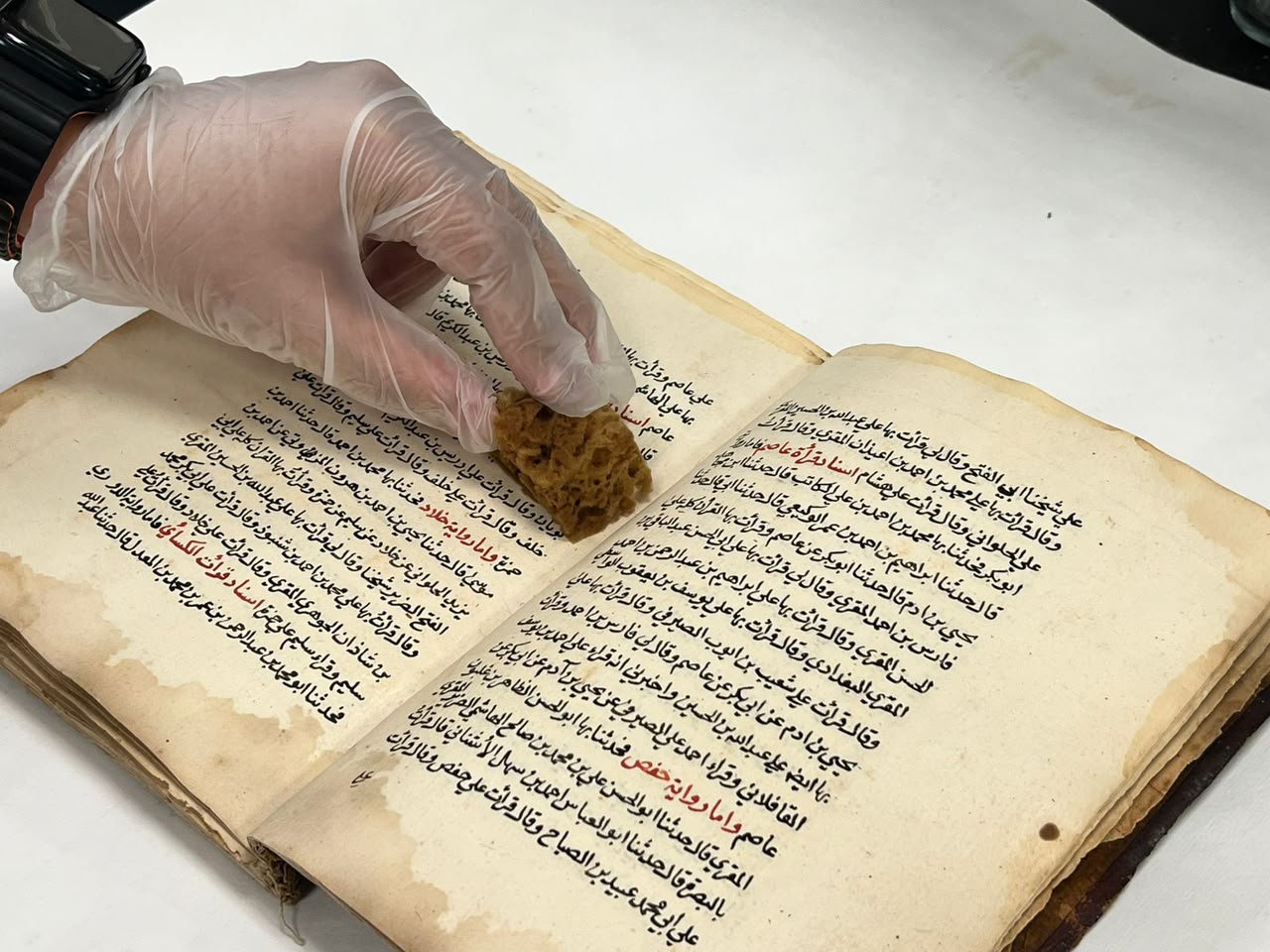
The Restoration Center at the King Abdulaziz Public Library treats over 10,000 cultural heritage items.
The Restoration and Treatment Center at the King Abdulaziz Public Library has achieved a new milestone by restoring and treating over 10,861 items from the library’s collections—including historical photographs, documents, maps, rare books, manuscripts, newspapers, and periodicals. This work was carried out using the latest scientific and professional methods for restoration, treatment, sterilization, and preventive maintenance, thereby helping to preserve these holdings, extend their lifespan, and ensure their sustainability for future generations.
Read More
The King Abdulaziz Public Library hosts cultural gatherings and publishes novels for young adults.
The King Abdulaziz Public Library continues to offer diverse cultural and intellectual programs aimed at fostering cultural awareness within the Kingdom, strengthening the cultural elements that bridge heritage and modernity, and showcasing the Kingdom’s cultural identity through activities that promote the presence of national, Arab, Islamic, and global cultures.
Read More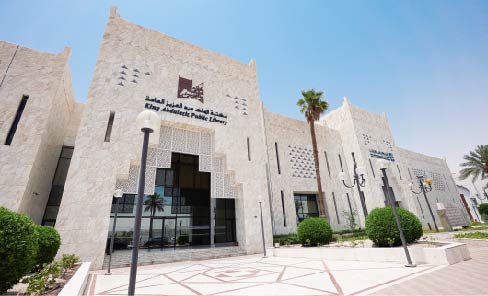
King Abdulaziz Public Library Launches "AI Generation" Summer Camp
The King Abdulaziz Public Library, represented by its General Department for Children, has launched the "AI Generation" summer camp. This distinctive initiative aims to develop the skills of children and youth in the fields of technology, artificial intelligence, and innovation through an educational experience that combines technical, cultural, and recreational elements.
Read More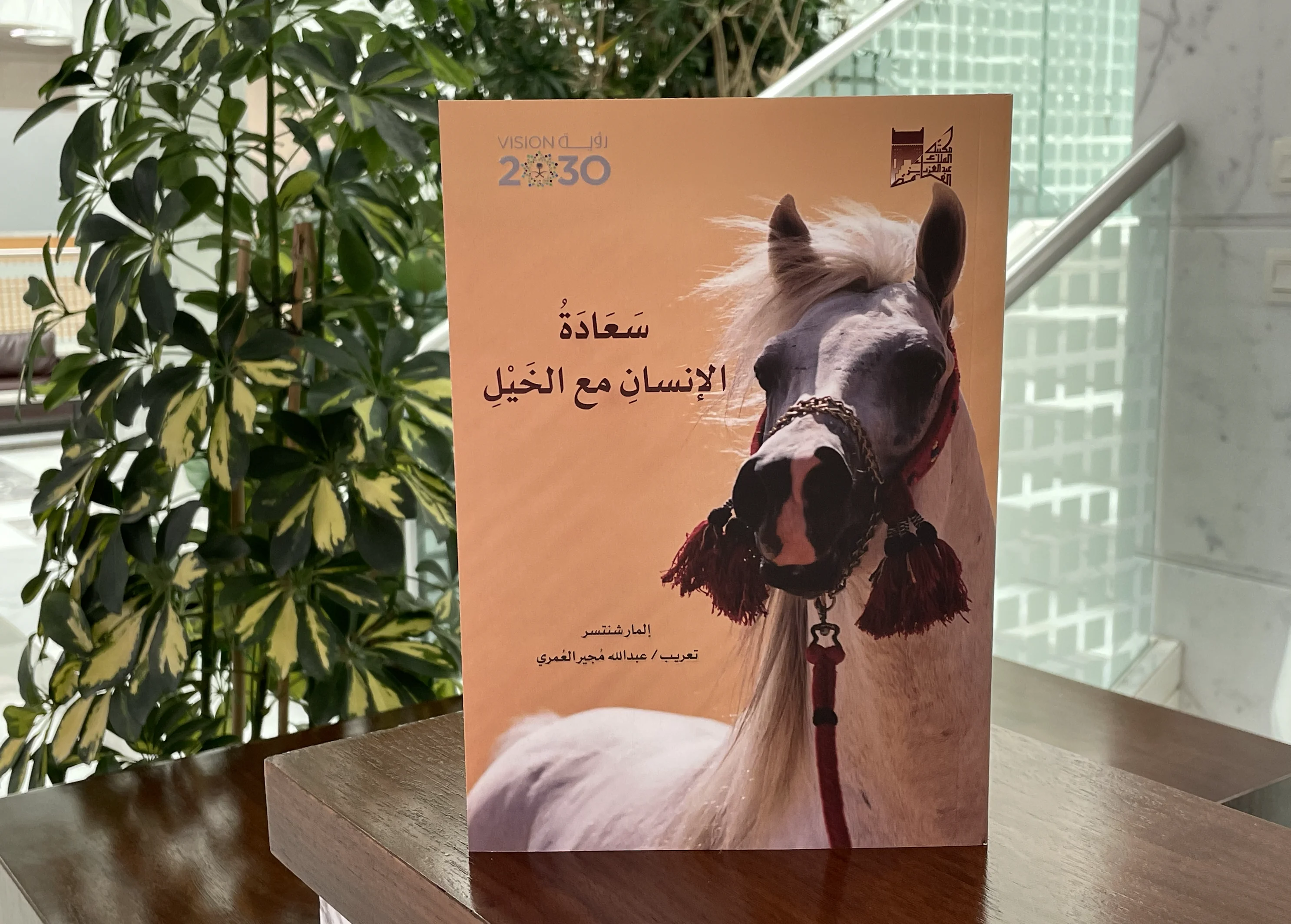
On World Horse Day, the King Abdulaziz Public Library highlights its efforts to document Arabian horse heritage.
On World Horse Day, the King Abdulaziz Public Library highlights its efforts to document Arabian horse heritage.
Read More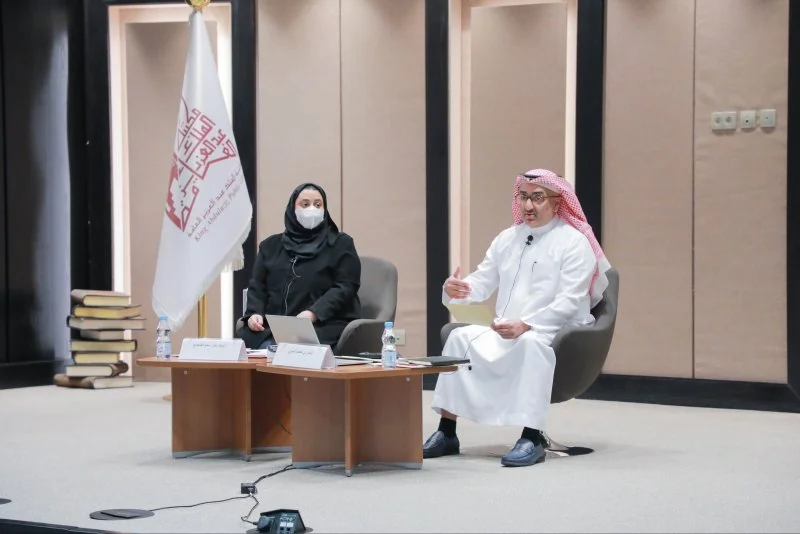
Bandar Al-Harbi discusses transforming events into a national story in a lecture at the King Abdulaziz Library.
Bandar Al-Harbi discusses transforming events into a national story in a lecture at the King Abdulaziz Library.
Read More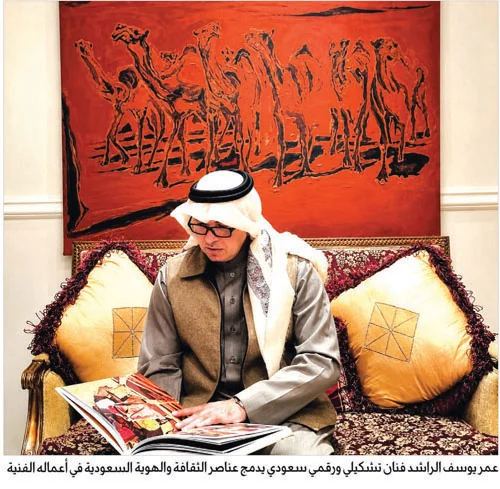
When Camels Become a Language of Beauty... King Abdulaziz Library Explores the Desert’s Memory Through Saudi Art
When Camels Become a Language of Beauty... King Abdulaziz Library Explores the Desert’s Memory Through Saudi Art
Read More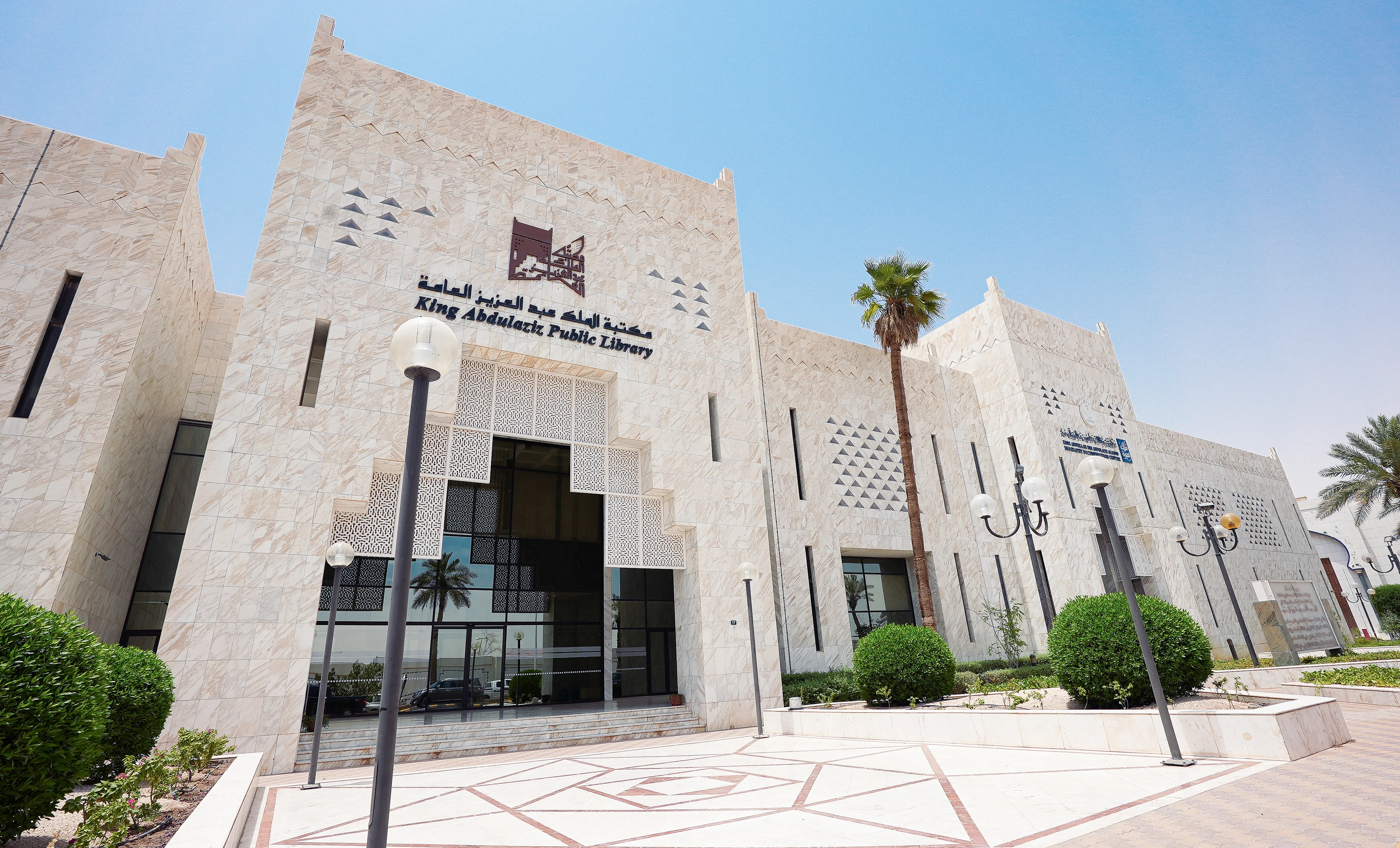
With over 218,000 diverse items, the King Abdulaziz Public Library preserves heritage and renews the national memory.
With over 218,000 diverse items, the King Abdulaziz Public Library preserves heritage and renews the national memory.
Read More
The King Abdulaziz Public Library leads the revival of travel literature and documents the history of the Arabian Peninsula and the Kingdom.
The King Abdulaziz Public Library leads the revival of travel literature and documents the history of the Arabian Peninsula and the Kingdom.
Read More
